Skip to content
Japanese men’s haircuts have a reputation for being weird, anime-inspired, or hard to pull off. That reputation is wrong. After working with clients who’ve traveled through Tokyo and Osaka, I’ve cut more requests based on Japanese salon culture in the last three years than ever before. The truth is, mens hairstyles japan offers are mostly clean, precise, and grounded in real technique. The GROO look, the two-block cut, the textured crop, these all come from a salon culture that obsesses over细节 and shape.
Quick answer: The best mens hairstyles japan offers split into three groups: short classic cuts (two-block, regulation, ivy league), medium textured styles (Korean-inspired perms, GROO, comma hair), and longer modern looks (middle part, wolf cut, hime cut). Choose by your hair type first, then your willingness to style daily, then face shape.
Understanding Japanese Men’s Hairstyles
Japanese barbering has its own training system and aesthetic vocabulary. Most Japanese barbers complete a two-year apprenticeship program before they touch a paying client, and the precision shows. Cuts tend to feature sharper lines, more deliberate shape, and stronger contrast between top and sides than what you’ll find in average American shops. According to the American Academy of Dermatology, healthy hair starts with scalp care and gentle handling, principles Japanese salons have built into their culture for decades.
What separates Japanese cuts from generic “Asian” cuts online is the consultation process. Most Japanese salons include a five to ten minute consultation, shampoo, and scalp massage as part of the standard service. The cut itself focuses on shape and movement, not just length reduction. This is why Japanese styles photograph well and age gracefully over the four to six weeks between cuts.
The biggest misconception is that you need straight Asian hair to wear these cuts. I’ve cut GROO hair, two-block, and textured crops on Black, white, and Latino clients. The technique adapts. What you do need is a willingness to use product daily and visit your stylist every four to six weeks. Skimp on either and the shape collapses fast.
The 14 Best Japanese Men’s Hairstyles
1. Two Block Cut (ツーブロック)
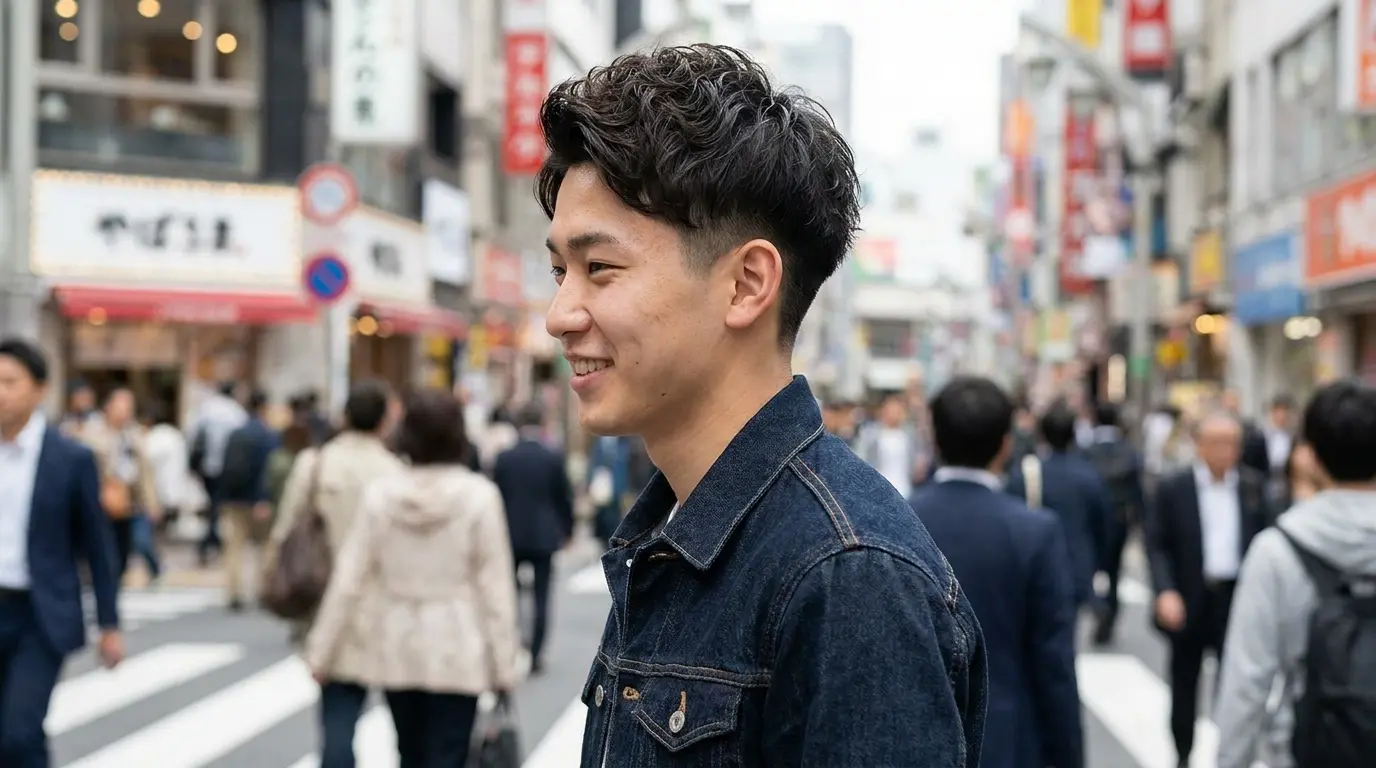
The two-block is the foundation cut in modern Japanese salons. The bottom block (sides and back) is cut short or shaved, while the top block stays long and disconnected. It’s the cut that launched the Korean wave of men’s styling and remains the most-requested Asian cut in my chair.
Best For: Oval and oblong face shapes, straight thick hair, ages 18-35, casual to smart-casual settings
How to Ask Your Barber: “Two-block, leave the top long, take the sides down to a skin fade. I want a clear disconnect, not a gradual blend.”
Maintenance: Touch-up every 3-4 weeks to keep the disconnect sharp. Style top with sea salt spray and matte clay. Difficulty: 2/5
A client flew in from Seoul last spring specifically asking for a two-block with a hard part. He showed me a reference photo with the part shaved in. I explained that hard parts on Asian hair tend to grow back fuzzy within a week, so we compromised with a clipped part instead. He came back monthly for six months before moving back.
2. Regulation Cut (レギュレーションカット)
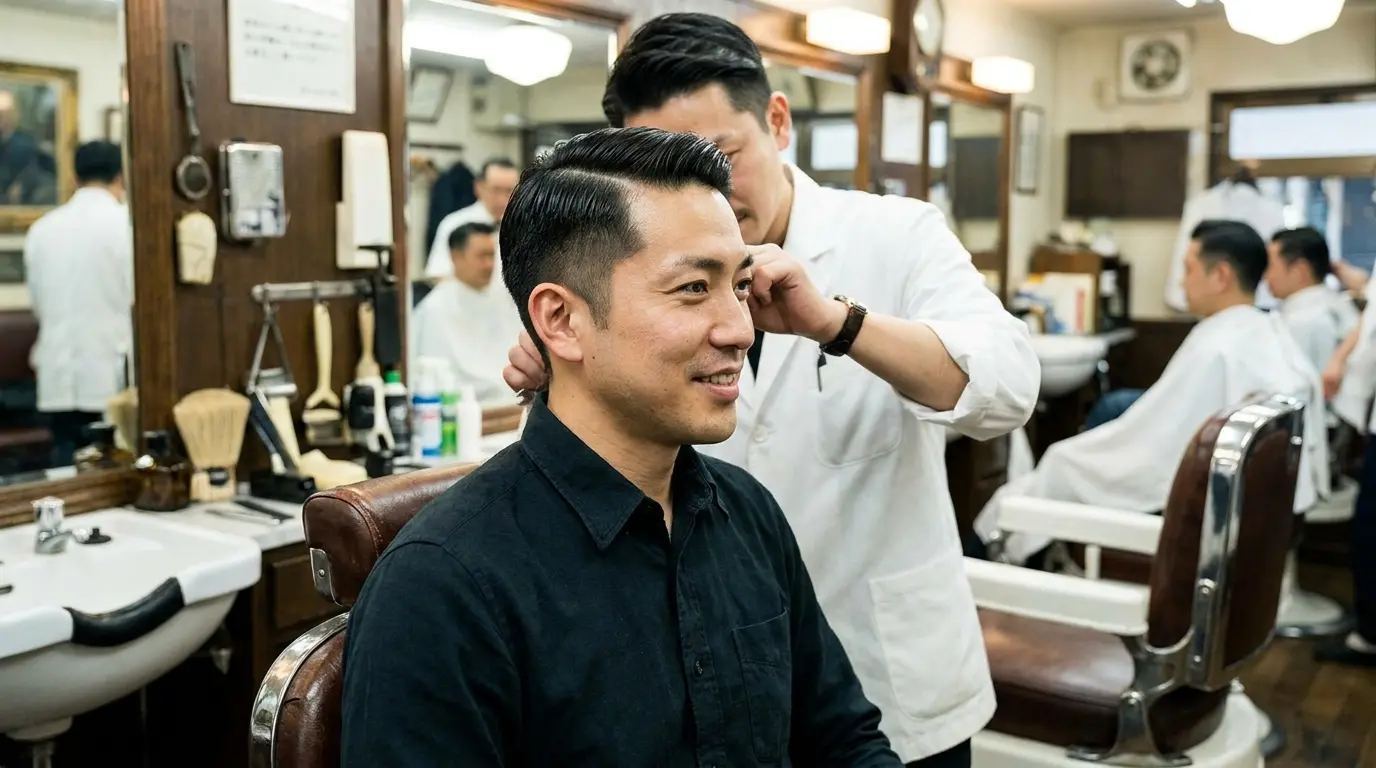
The regulation is Japan’s answer to the classic Ivy League. Short all over with a side part, tapered sides, and clean lines. It’s conservative enough for any office and sharp enough to feel intentional. Japanese offices love this cut because it photographs well for ID badges.
Best For: All face shapes, straight or wavy hair, ages 25-55, professional and conservative settings
How to Ask Your Barber: “Regulation cut, two on the sides, three on top, with a side part on the left. Keep it conservative and clean.”
Maintenance: Touch-up every 3-4 weeks. Style with light pomade and comb. Difficulty: 1/5
3. Comma Hair (コンマヘア)
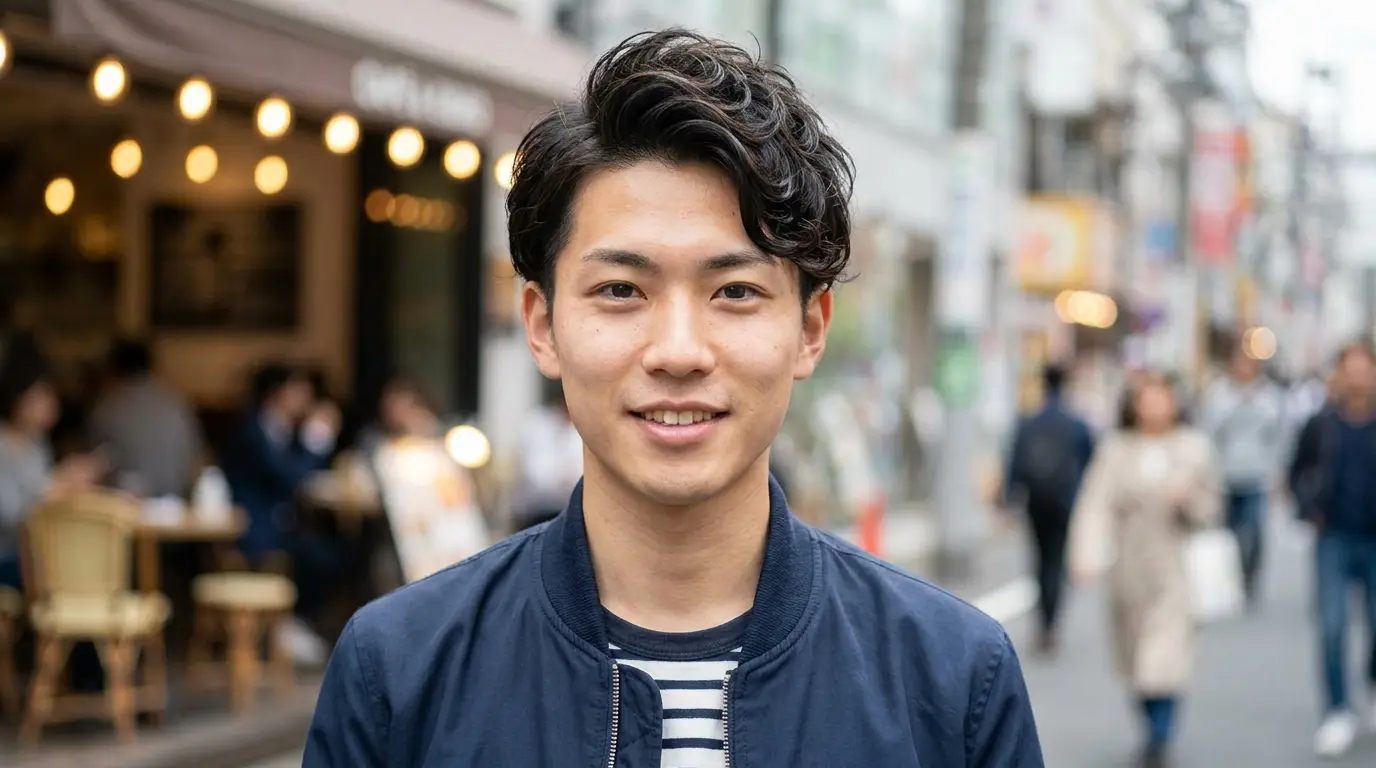
Comma hair is the Korean-influenced cut where the front fringe is styled to fall forward and curl slightly to one side, creating a comma shape at the hairline. It works because it disguises a wide forehead and adds visual interest without much length.
Best For: Round and oblong face shapes, straight thick hair, ages 18-30, casual and trendy settings
How to Ask Your Barber: “Comma hair, 4 inches on top with the front long enough to fall into my eyes, sides tapered. I want that Korean idol look.”
Maintenance: Touch-up every 4-5 weeks. Style with curl cream and blow dryer, training the front to one side. Difficulty: 3/5
Watch out for: Comma hair on coarse or wavy hair behaves differently. The fringe won’t hold the curl without serious product, and on humid days it springs back up.
4. GROO Hair (グルー)
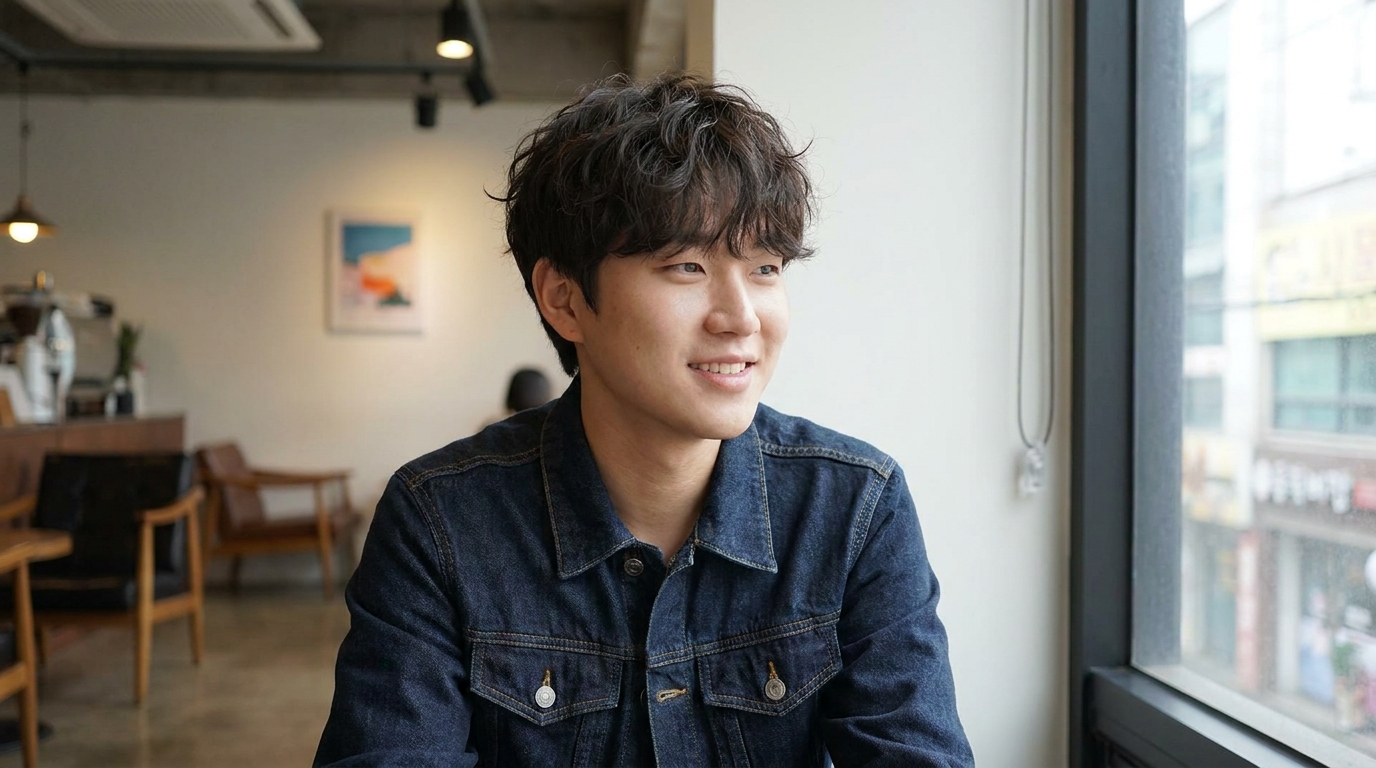
GROO is the Korean perm technique that took Japanese salons by storm around 2019. It adds soft, loose curls mainly through the bangs and top, while the sides stay straight. The result reads as effortless, like you woke up with good hair.
Best For: All face shapes, fine or medium-thick straight hair, ages 18-30, casual to smart-casual settings
How to Ask Your Barber: “GROO perm on the top, especially the bangs. Leave the sides straight. I want loose curls, not tight perms.”
Maintenance: Perm lasts 4-6 months but the shape needs refresh every 8-10 weeks. Style with curl cream. Difficulty: 4/5
I steer most clients away from full GROO perms because they commit you to a look for half a year. If you’re unsure, ask for a digital perm instead. It uses heat instead of chemicals and grows out faster, which gives you an exit ramp if you hate it.
5. Middle Part (センター分け)

The middle part made a major comeback through BTS and Korean dramas. Japanese salons adapted it with longer length on top and curtain bangs framing the face. It’s softer than a side part and works surprisingly well on round face shapes.
Best For: Oval and oblong face shapes, straight or wavy hair, ages 18-35, casual to creative-professional settings
How to Ask Your Barber: “Middle part with curtain bangs, 5-6 inches on top, tapered sides. I want that soft Korean drama look.”
Maintenance: Touch-up every 5-6 weeks. Style with round brush and blow dryer, training the part. Difficulty: 3/5
6. Ivy League (アイビーリーグ)

The Japanese ivy league runs slightly longer on top than the American version. It’s the cut businessmen default to when they want to look sharp without trying too hard. The longer top gives you more styling options while keeping the sides short and professional.
Best For: All face shapes, straight hair, ages 25-50, professional settings
How to Ask Your Barber: “Ivy league with length on top, about 3 inches, tapered sides with a clean part. Conservative but not boring.”
Maintenance: Touch-up every 3-4 weeks. Style with light pomade. Difficulty: 2/5
7. Mushroom Cut (マッシュ)

The Japanese mushroom cut (mashu) is the modern bowl cut. The fringe is cut straight across at eyebrow level and the sides blend into the top. It’s been the signature cut of Japanese host club culture and has migrated into mainstream fashion.
Best For: Oval and oblong face shapes, straight thick hair, ages 18-30, fashion-forward settings
How to Ask Your Barber: “Mushroom cut with bangs at my eyebrows, blended sides, no fade. Keep the shape rounded.”
Maintenance: Touch-up every 4-5 weeks. Style with light cream and blow dryer. Difficulty: 2/5
8. Wolf Cut (ウルフカット)
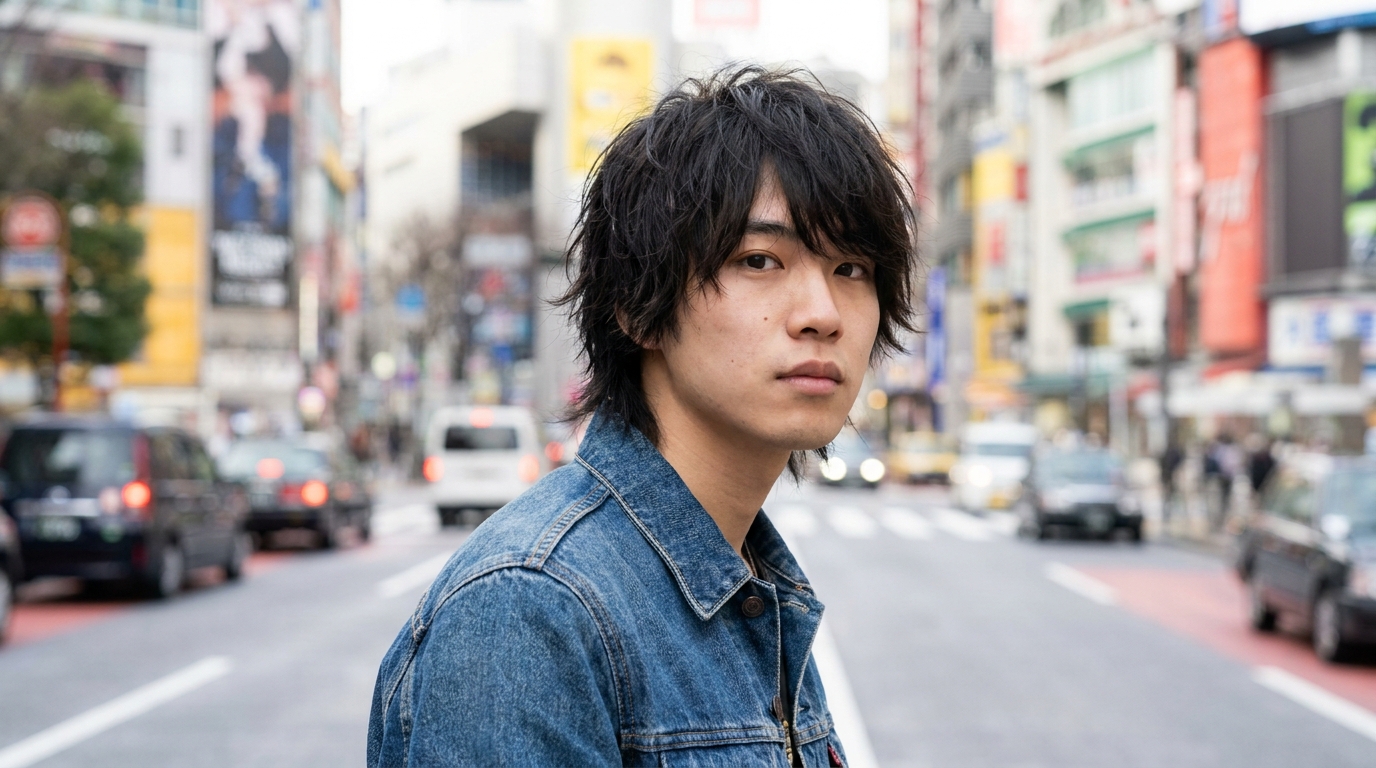
The wolf cut layers the top heavily while keeping the bottom longer, creating a shaggy, textured silhouette. Japanese salons adapted it with sharper layering than the Korean original, which gives it more shape and less “I just rolled out of bed” energy.
Best For: Oval and square face shapes, wavy or straight hair, ages 18-30, casual and trendy settings
How to Ask Your Barber: “Wolf cut with heavy layers on top, leave length in the back, taper the sides. I want texture and movement.”
Maintenance: Touch-up every 6-8 weeks. Style with texturizing spray and matte clay. Difficulty: 3/5
Watch out for: Wolf cuts on fine hair look stringy and sad by week four. You need real density to pull this off.
9. Hime Cut (姫カット)
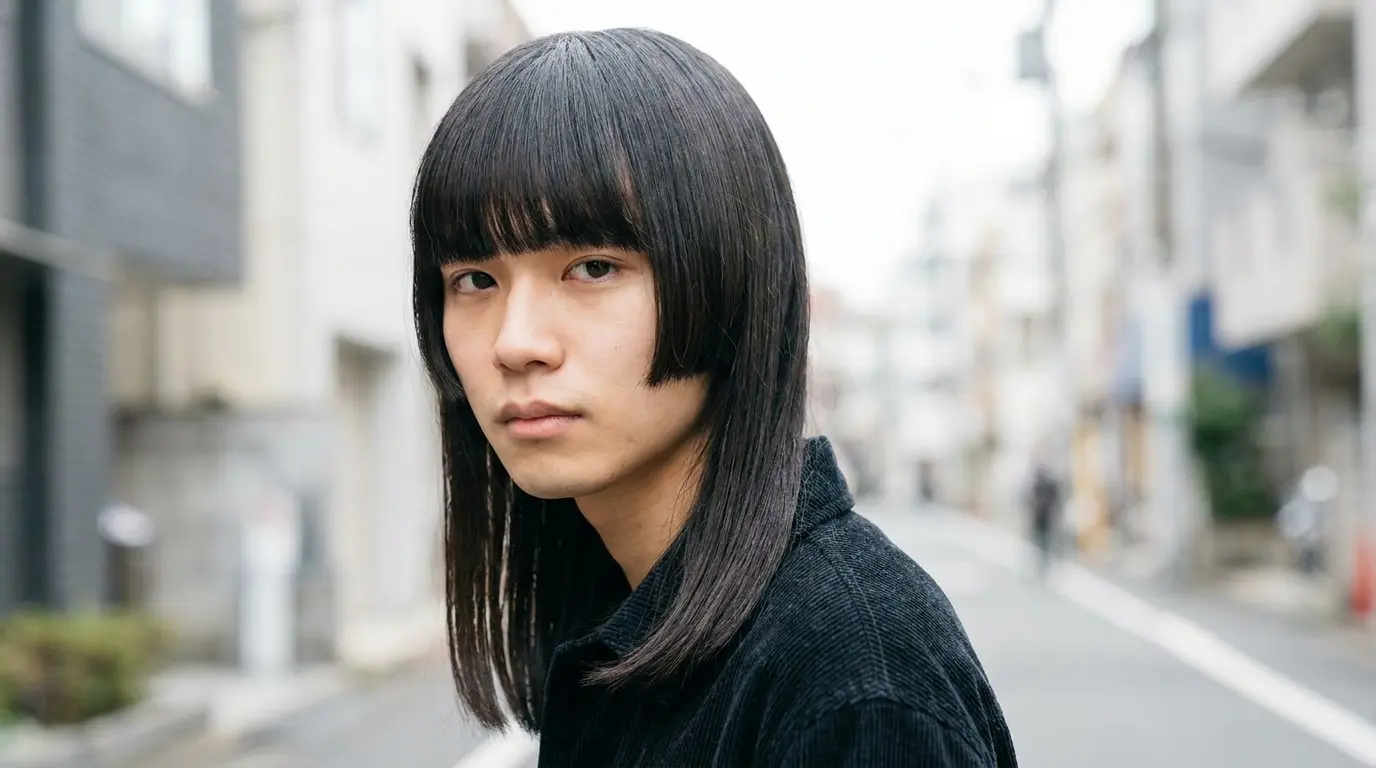
The hime cut features blunt straight bangs cut at cheek level with long face-framing pieces and the back left long. It’s bold, dramatic, and unmistakably Japanese. Most non-Japanese faces can pull it off with the right consultation.
Best For: Oval and heart-shaped faces, very straight thick hair, ages 18-30, fashion and creative settings
How to Ask Your Barber: “Hime cut, blunt bangs at cheek level, long face-framing pieces, leave the back long. I want that princess look.”
Maintenance: Touch-up every 6-8 weeks. Style with flat iron for sleek finish. Difficulty: 4/5
This is a polarizing cut. I steer most clients toward comma hair or middle part instead because the hime requires daily flat-ironing and doesn’t survive humid climates well.
10. Textured Crop (テクスチャークロップ)
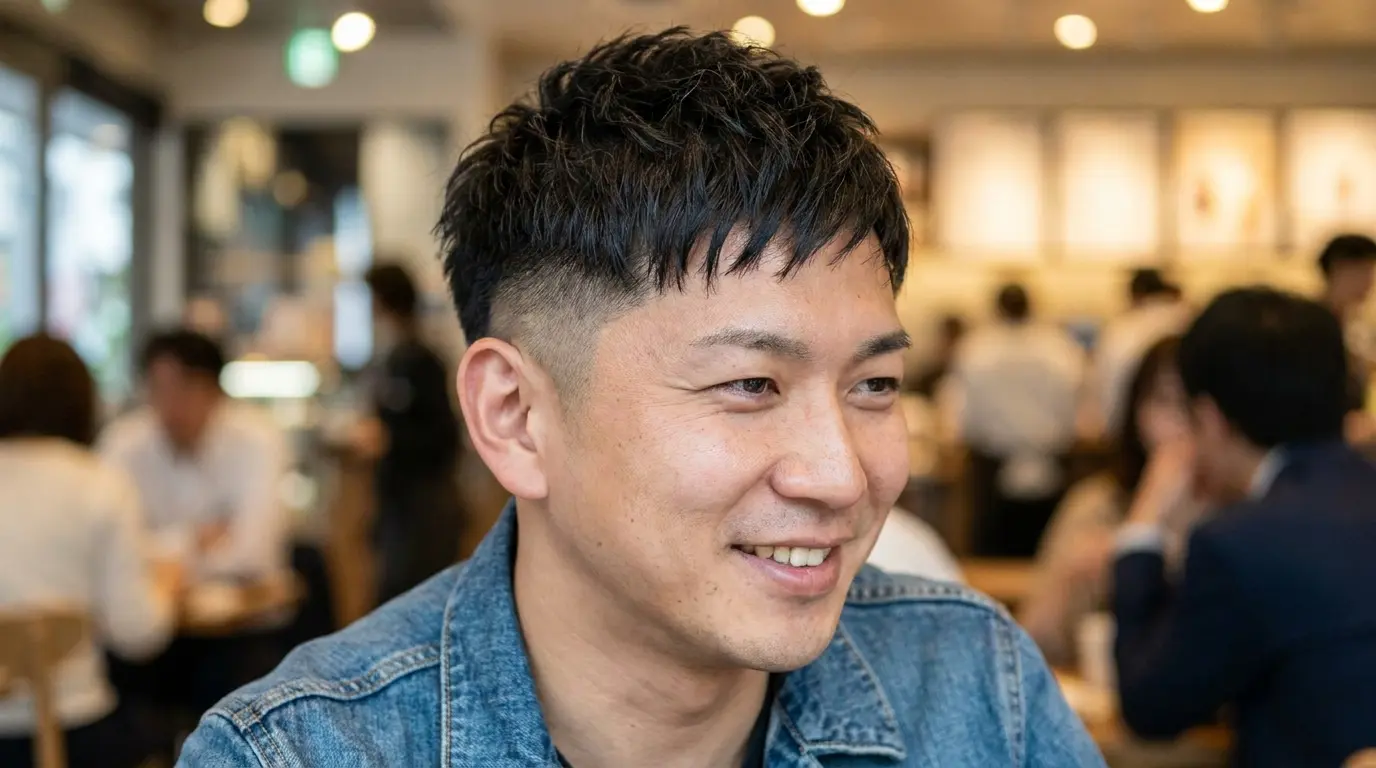
The Japanese textured crop uses point cutting and slide cutting to create choppy, piece-y texture on top. It’s similar to the Western version but with more deliberate shape and usually a skin fade on the sides. For cowlick considerations on this cut, see our cowlick hairstyles guide.
Best For: All face shapes, straight or wavy hair, ages 20-45, casual-professional settings
How to Ask Your Barber: “Textured crop, point-cut the top for movement, skin fade on the sides. Keep the shape modern and choppy.”
Maintenance: Touch-up every 4-6 weeks. Style with matte clay and pre-styler. Difficulty: 2/5
11. Pompadour (ポンパドール)
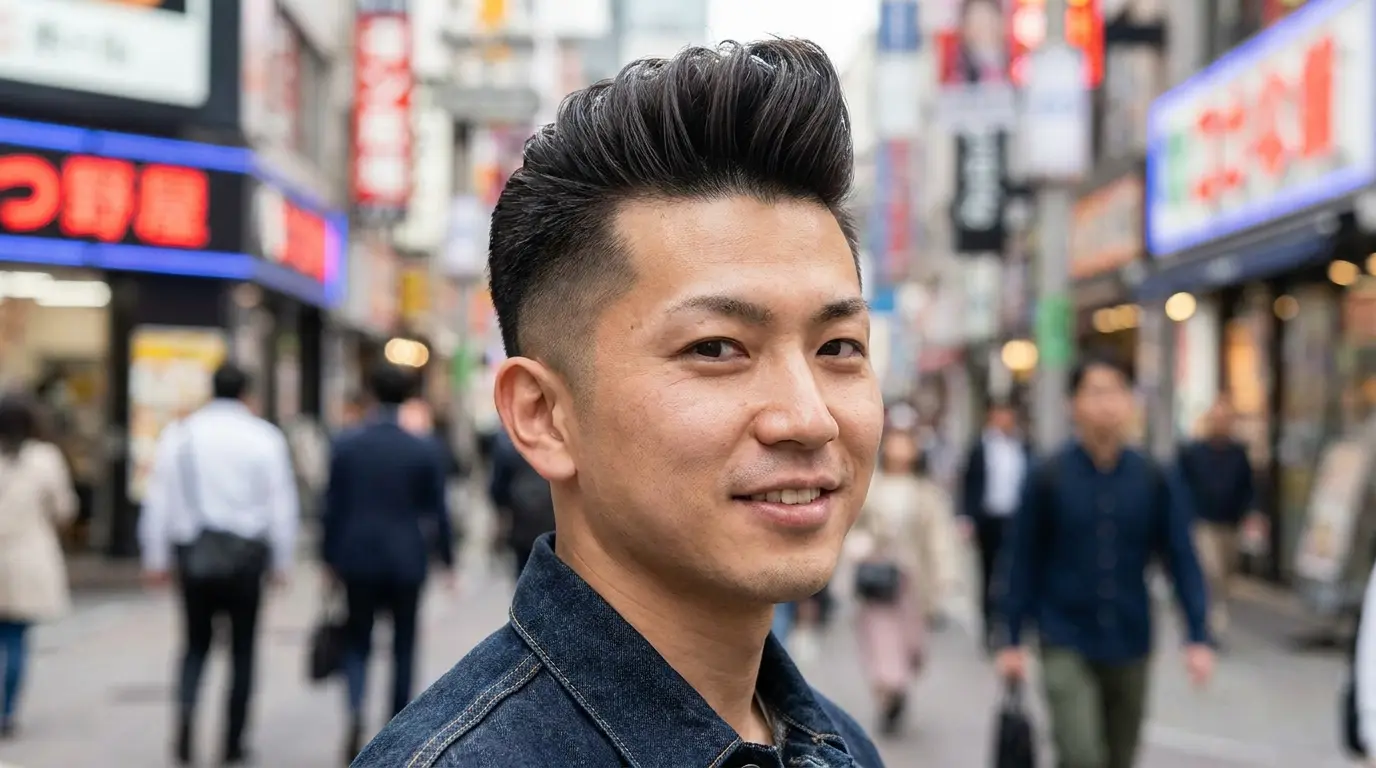
The Japanese pompadour runs slightly higher and tighter than the American version, often paired with a skin fade or undercut. It’s a power look that works in business-casual settings and photographs exceptionally well for social media.
Best For: Oval and oblong face shapes, thick straight hair, ages 25-50, business-casual to formal settings
How to Ask Your Barber: “Pompadour with real volume, 4-5 inches on top, skin fade on the sides. I want height and shape.”
Maintenance: Touch-up every 3-4 weeks. Style with volumizing pre-styler and strong-hold pomade. Difficulty: 4/5
12. Short Pixie (ショートピクシー)
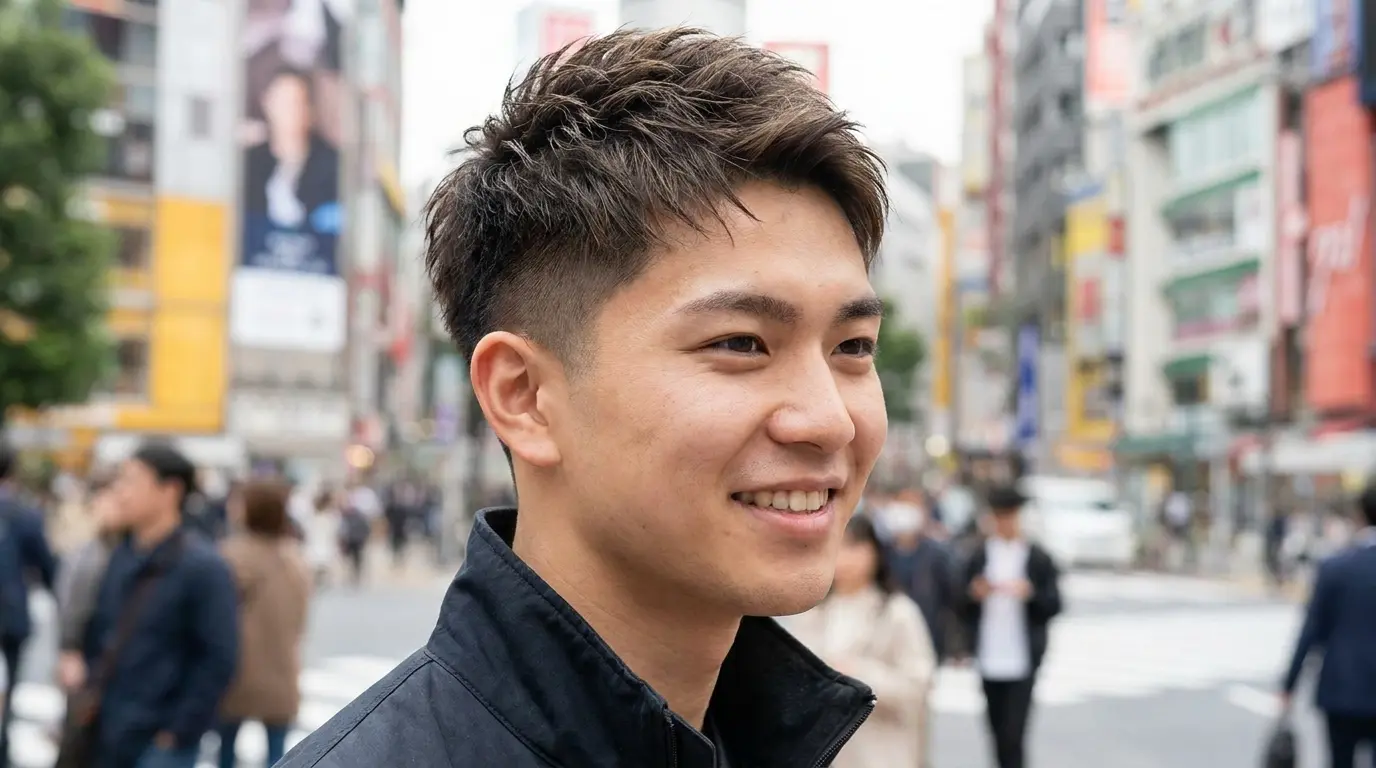
The short pixie in Japanese salons is more textured and modern than the Western version. It features a choppy top with faded sides, often with longer pieces left on top for movement. It’s the cut you see on Tokyo street style influencers.
Best For: All face shapes, fine to medium hair, ages 18-35, casual and fashion settings
How to Ask Your Barber: “Short pixie, textured top with longer pieces on top, faded sides. Modern Tokyo street style.”
Maintenance: Touch-up every 4-5 weeks. Style with matte clay and texturizing spray. Difficulty: 2/5
13. Slicked Back (オールバック)
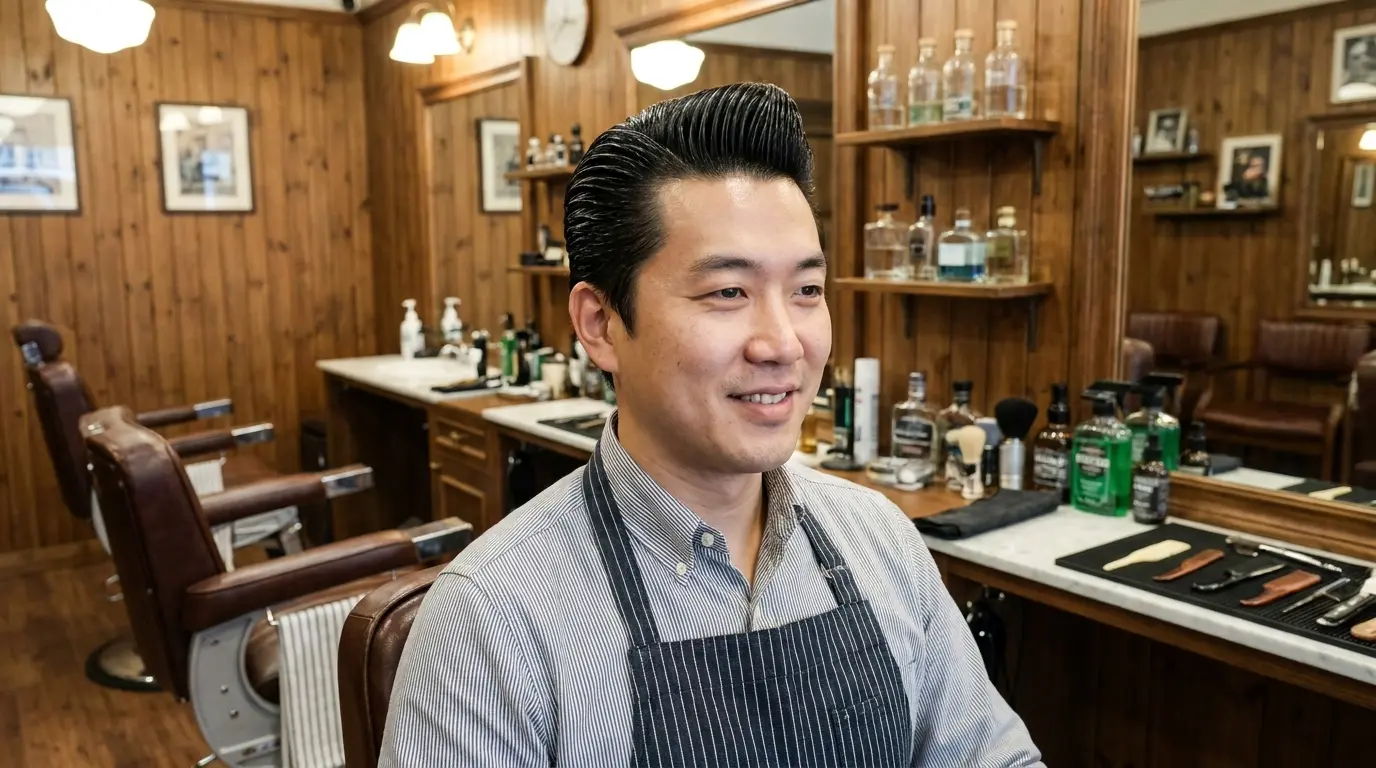
The Japanese slicked back (all-back) keeps the hair neat, controlled, and off the face. It’s the cut executives and salarymen default to. The Japanese version uses less product and relies on the natural weight of Asian hair to hold the shape.
Best For: Oval and oblong face shapes, straight thick hair, ages 25-55, professional and formal settings
How to Ask Your Barber: “Slicked back, 3-4 inches on top with tapered sides. Use pomade for hold and shine.”
Maintenance: Touch-up every 3-4 weeks. Style with pomade and comb. Difficulty: 2/5
For more fade options that pair with this look, check our low taper fade variations guide.
14. Buzz Cut (バズカット)
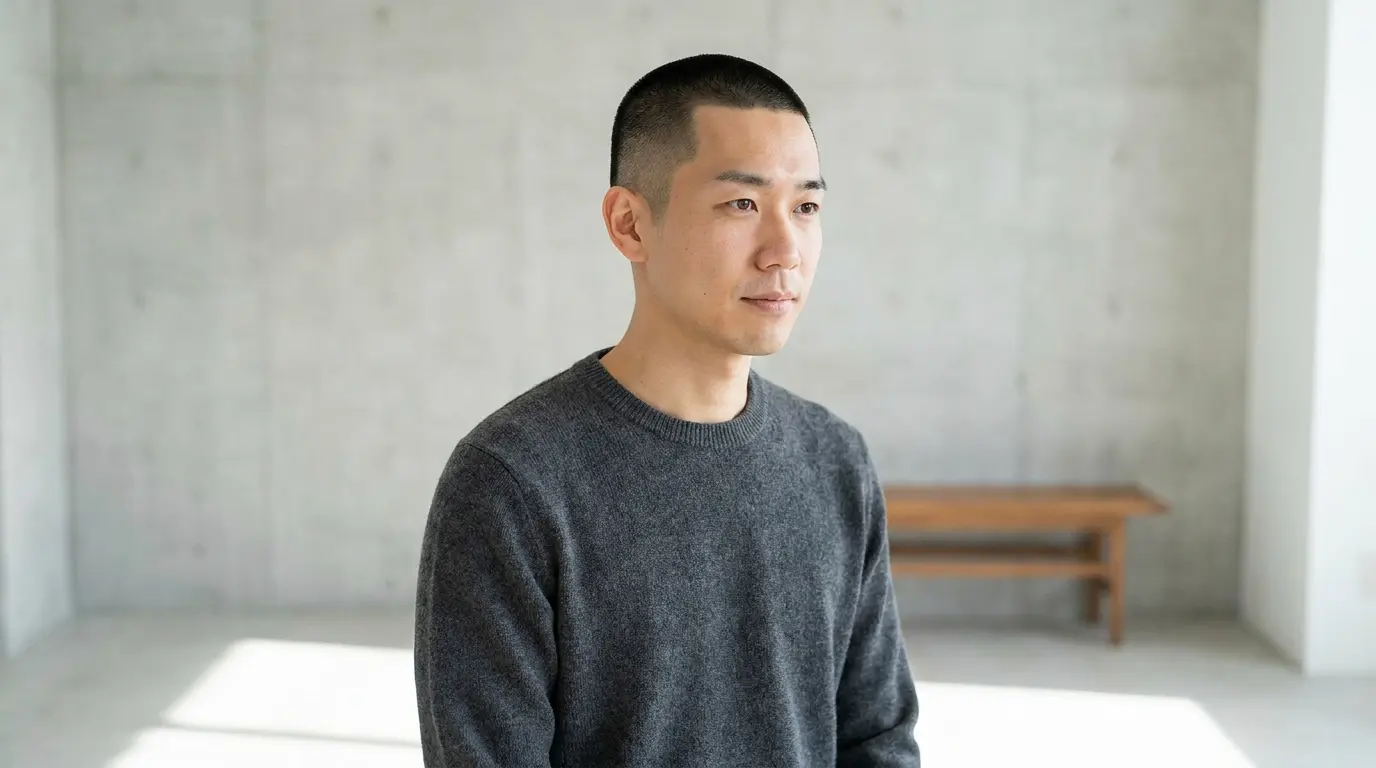
The Japanese buzz cut is shorter and more uniform than the American version, often taken down to a guard 1 or 2 all over. It’s the cut athletes and minimalist-leaning professionals choose. Clean, no-fuss, no product.
Best For: All face shapes, all hair types, ages 25-50, casual to professional settings
How to Ask Your Barber: “Buzz cut all over, guard 2. Even and clean.”
Maintenance: Touch-up every 2-3 weeks. No styling needed. Difficulty: 1/5
Choosing Your Japanese Hairstyle by Hair Type and Length
Japanese cuts work best when matched to your actual hair type. Here’s how to decide:
Short and low-maintenance: Buzz cut, regulation, ivy league, short pixie. Touch-up every 3-4 weeks, minimal daily styling.
Medium with texture: Textured crop, two-block, comma hair, slicked back. Touch-up every 4-5 weeks, requires 5-10 minutes daily styling.
Longer and statement-making: Wolf cut, hime cut, middle part, pompadour. Touch-up every 5-8 weeks, requires 15+ minutes daily styling and often heat tools.
Permed texture: GROO perm. Commits you to the look for 4-6 months. Choose a digital perm for easier exit if you change your mind.
Japanese Hair Product Guide
Japanese salons carry specific product lines that work well with these cuts. The brands I’d recommend looking for:
Gatsby (ギャツビー): The default Japanese drugstore line. Wax, gel, and styling cream at accessible prices. Their Moving Rubber series is solid for textured crops and two-block styles.
Uniqlo Hair: A newer minimalist line designed for the modern Japanese cut. Lightweight, no residue.
Lebel: A higher-end salon brand carried in premium Japanese salons. Their See/Sea Spray works well for GROO and middle part styles.
Common Western substitutes: If you can’t access Japanese brands, sea salt spray, matte clay, and pomade from any quality brand work fine.
Common Mistakes With Japanese Cuts
I see these mistakes weekly from clients who tried to copy Japanese cuts without understanding the technique:
Asking for “the anime haircut”: Bring a specific reference photo, not a character. Anime hair is drawn, not realistic. Show your barber an actual photo of the style you want on a real person.
Skipping the consultation: Japanese cuts live and die by the consultation. If your barber rushes you into the chair, find a different barber. Five minutes of conversation saves six weeks of bad hair.
Wrong fade pairing: Not every Japanese cut needs a skin fade. Two-block with a low fade looks more mature than the same cut with a skin fade. Match the fade to the setting.
Skipping product: Japanese cuts are designed with product in mind. Skipping product means the cut won’t sit right. Budget for one or two quality styling products.
Stretching touch-ups: These cuts lose their shape fast. Going six weeks between cuts on a textured crop looks sloppy. Stick to the four to six week window.
Final Thoughts on Japanese Hairstyles
Japanese salon culture produces some of the most technically precise cuts you’ll find anywhere. The 14 styles above work for most hair types and face shapes, with the right consultation and styling commitment. If you’re new to Japanese cuts, start with a regulation cut or ivy league. They’re conservative, forgiving, and give you a feel for the technique. From there, you can experiment with two-block, comma hair, or GROO as you get comfortable.
The most important rule is finding a barber who actually understands Japanese salon culture. If your barber has never studied Japanese cutting techniques, ask to see their portfolio. A good Japanese-inspired cut should have crisp lines, deliberate shape, and movement that survives a full workday. Done right, you’ll understand why Japanese salon culture has influenced global men’s grooming for decades.
Frequently Asked Questions About Japanese Men’s Hairstyles
What is the most popular Japanese men’s haircut?
The two-block cut is the most-requested Japanese men’s haircut globally, especially since 2018. It pairs a disconnected long top with short or shaved sides and works across most age groups and face shapes.
Do Japanese haircuts work on non-Asian hair?
Yes, most Japanese cuts adapt well to all hair types. The technique focuses on shape and movement, not just length reduction. Bring reference photos to your barber and discuss how the cut will work with your specific hair texture.
How much do Japanese haircuts cost?
In Japan, salon cuts range from $40-100 USD. In Western countries, barbers familiar with Japanese techniques typically charge $50-120 depending on location and service complexity. Perms and specialty cuts cost more.
What is a GROO perm?
GROO is a Korean perm technique popular in Japanese salons. It adds soft loose curls mainly to the bangs and top, while the sides stay straight. The perm lasts 4-6 months and requires daily curl cream.
How often should I get a Japanese haircut?
Most Japanese cuts need touch-ups every 3-6 weeks depending on the style. Short cuts like regulation and ivy league need cuts every 3-4 weeks. Longer styles like wolf cut and hime cut can go 6-8 weeks.
What is the difference between two-block and undercut?
Two-block is the Korean/Japanese version of the undercut. Both feature a long top with short sides, but two-block usually has a sharper disconnect and is often paired with curtain bangs or comma hair styling.
Do I need to use Japanese hair products?
No, but they’re designed for these cuts. Western products like sea salt spray, matte clay, and pomade work fine. The key is matching the product to your specific style and hair type.
Are Japanese haircuts high maintenance?
It depends on the style. Buzz cuts and regulation cuts need minimal daily styling. Two-block, comma hair, and middle part require 5-15 minutes daily. GROO perms and wolf cuts need the most commitment.