Skip to content
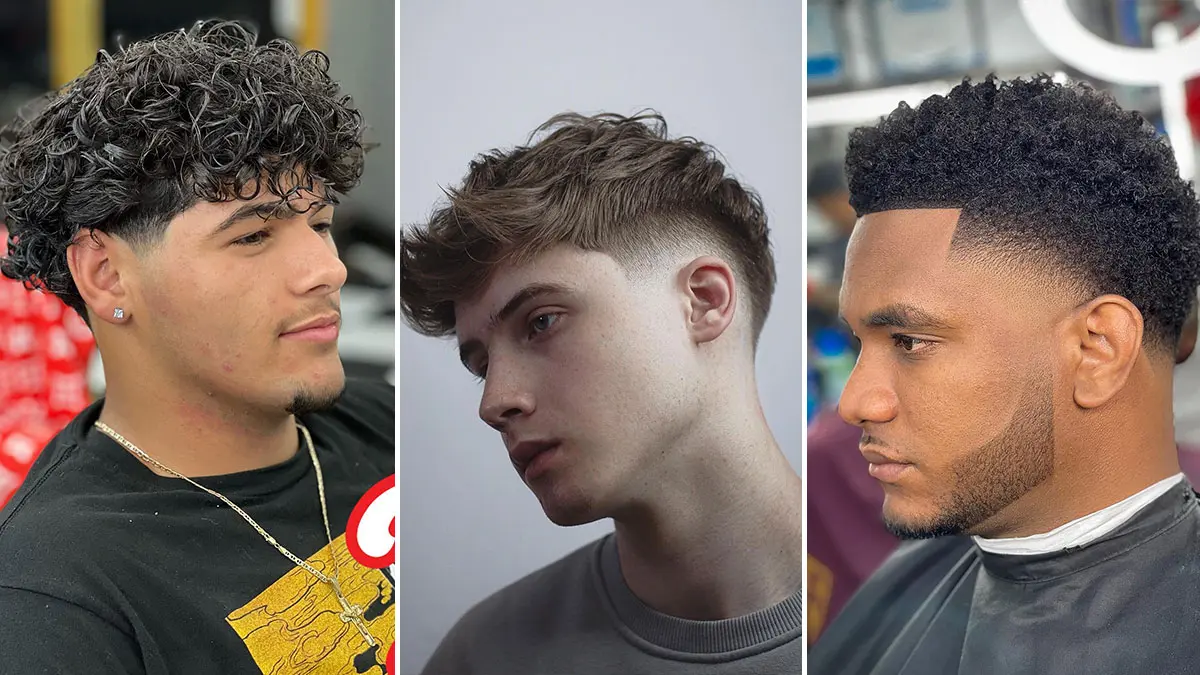
30 Low Taper Fade Curly Hairstyles to Inspire Your Next Cut
Looking for the perfect low taper fade curly hairstyle? You’re in the right place. Whether you’re after something bold or subtle, there’s a style here for you. We’ve compiled 30 of the best low taper fade haircuts for men with curly hair, complete with styling tips, maintenance advice, and exactly what to say to your barber.
These styles work with all curl patterns—from loose waves to tight coils. The low taper fade keeps your sides clean while letting your natural texture shine on top. Let’s dive in.
1. Classic Low Taper Fade with Natural Curls
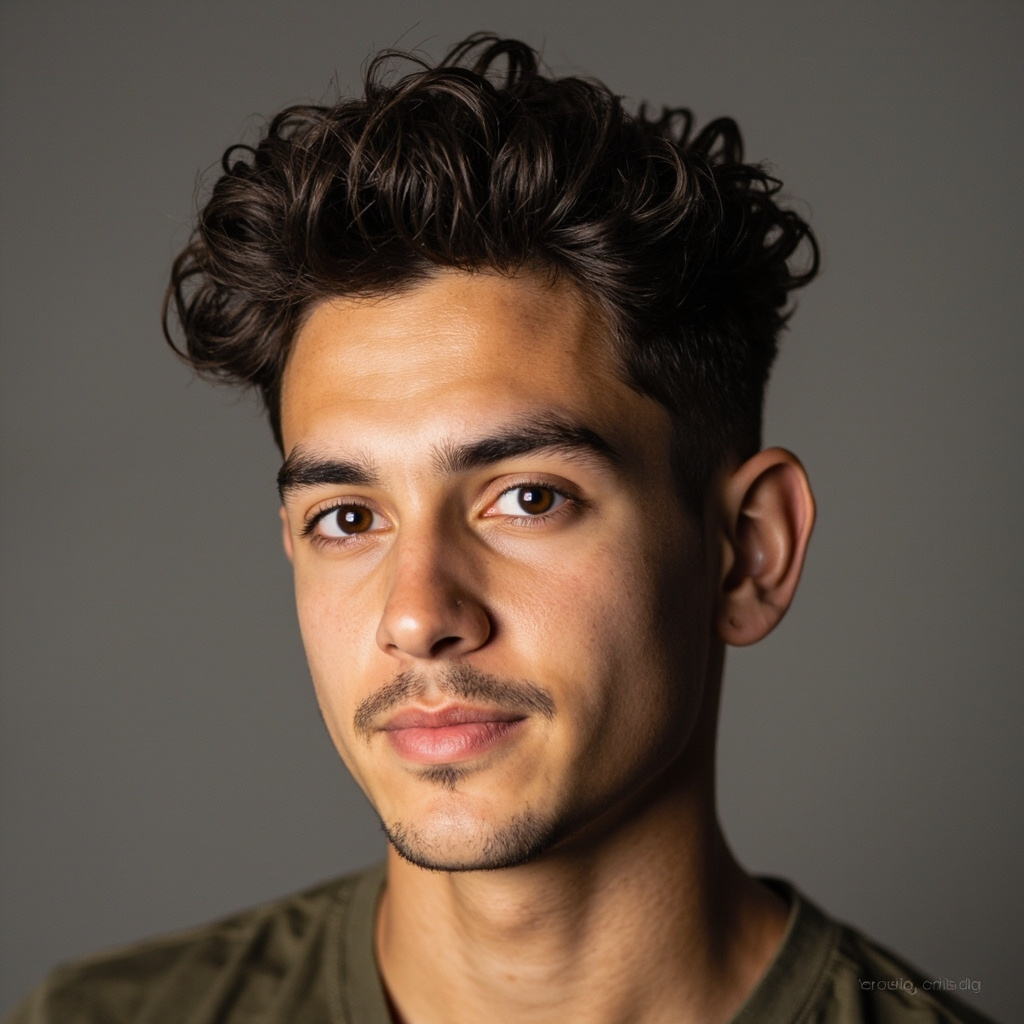
The timeless choice for a reason. This style lets your curls do their natural thing while the taper fade keeps everything polished at the sides. The key is balance—your curls should have enough length to show texture, but not so much that they become unmanageable.
For styling, apply a curl-enhancing cream when your hair is damp. Work it through with your fingers using an scrunching motion to encourage your natural curl pattern. Avoid using a brush after the cream sets in—letting your curls clump naturally creates that effortless, textured look that makes this style so appealing.
This cut suits most face shapes, especially oval and round faces. The clean sides create contrast that defines your jawline, while the curls on top add height that balances wider face proportions. If you have a longer face, ask your barber to leave a bit more length at the crown to avoid emphasizing length.
Maintenance is straightforward. A light hold gel or foam applied every few days keeps your curls defined without stiffness. The fade itself needs a touch-up every three to four weeks to stay crisp, but your curls can go longer between cuts.
Ask your barber: “Give me a low taper fade on the sides, leaving about three inches on top for my natural curls. I want the transition to be gradual and natural-looking.”
2. Low Taper Fade with Mid-Top Curls

This style sits in the sweet spot between short and long. The curls are positioned at medium height, giving you volume and presence without the full commitment of extra-long hair. It’s versatile enough for both professional settings and casual weekends.
To get this look, your barber should leave roughly two to three inches of length on top. The curls will sit at mid-head height, creating a balanced silhouette that works well with most hair types. Use a salt spray or texturizing spray to add grip and encourage your curls to hold their shape throughout the day.
The mid-top curl style works particularly well for square and rectangular face shapes. The height at the crown balances a stronger jaw, while the clean sides keep the overall look from becoming too heavy. If you have a heart-shaped face, this cut can balance a wider forehead with a narrower chin.
Styling products matter here. A lightweight curl cream provides definition without weighing your curls down. If your curls tend to frizz, layer a leave-in conditioner underneath your styling products. The combination creates hold while maintaining softness and movement.
Ask your barber: “Low taper fade with about two and a half inches left on top. I want the curls to sit at mid-head height, not too high or too low.”
3. Low Drop Fade with Curly Top
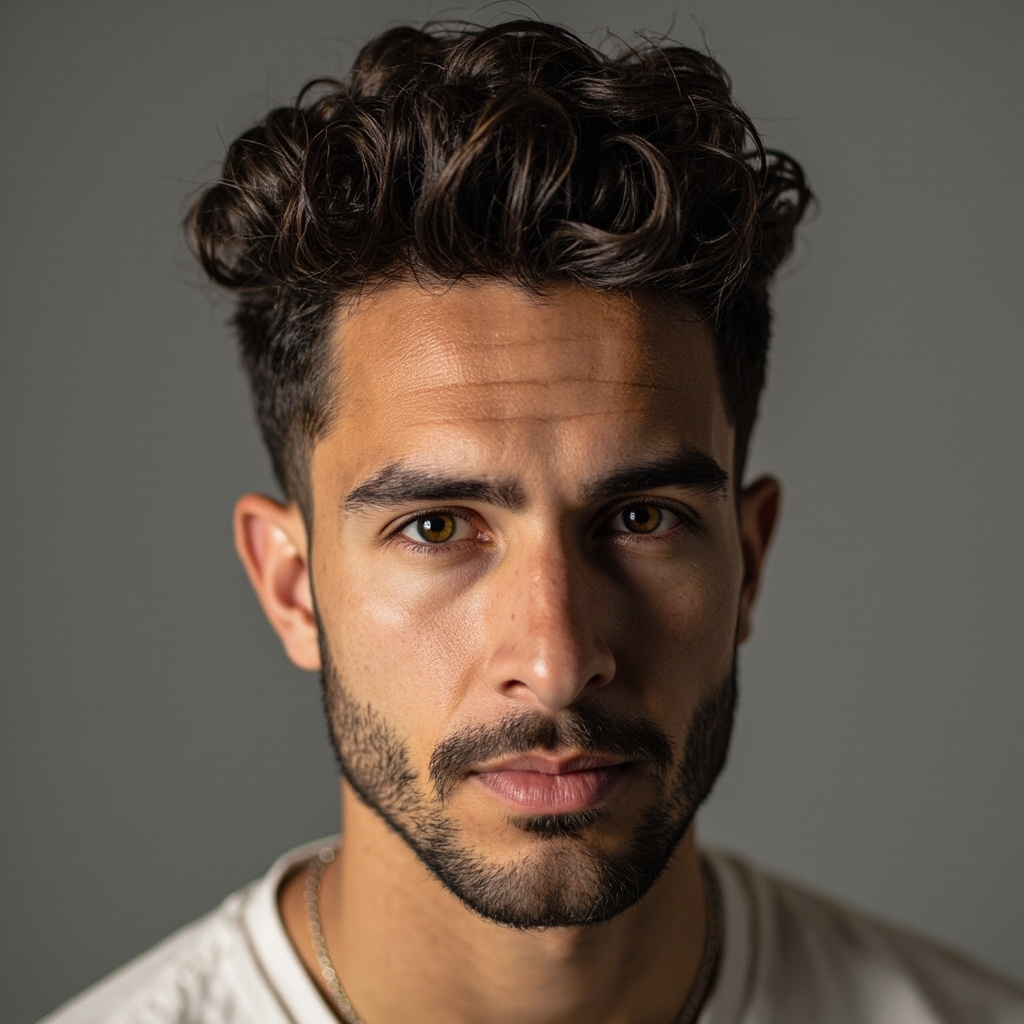
The drop fade adds visual interest that standard fades can’t match. Instead of a straight line, the fade curves down behind your ear before sweeping back toward your neck. This creates a dynamic, eye-catching detail that draws attention to your style.
With curly hair, the drop fade technique really shines. The curved line mirrors the natural movement of curls on top, creating visual harmony between the faded sides and textured crown. It’s a detail that looks intentional and premium, even though the technique is surprisingly accessible.
This style works exceptionally well for guys with thicker hair. The drop creates visual interest that balances heavier curl patterns, preventing your style from looking too uniform or styled. It also grows out gracefully—the curved line stays interesting even as the fade lengthens between cuts.
Face shape considerations: The drop fade particularly flatters round faces because the curved line creates the illusion of angles. It also works well with longer face shapes when paired with curls that have enough volume to balance proportions.
Ask your barber: “I want a low drop fade where the line curves down behind my ear before connecting at the neck. Keep my curls long on top to complement the drop.”
4. Low Taper Fade with Temple Fade
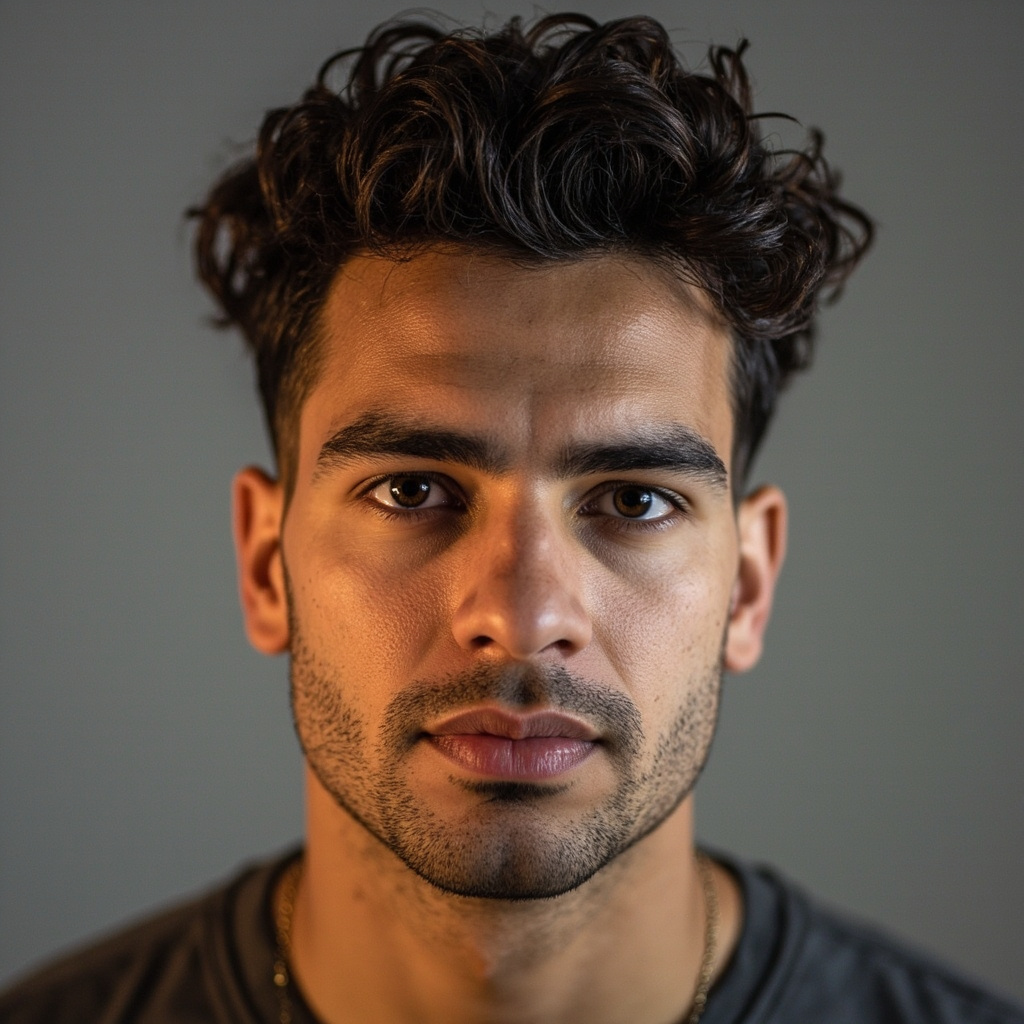
Temple fades focus the action at the corners of your hairline rather than wrapping all the way around your head. This creates a sharp frame around your face while keeping the rest of your sides slightly longer and more textured. It’s a subtle but distinctive variation that works for both professional and casual environments.
The beauty of the temple fade lies in its versatility. You can go subtle with a soft gradient or bold with a sharp disconnect. Your barber can adjust the intensity based on your preferences and the natural behavior of your hair. For curly hair, a softer transition often works better than a harsh line.
When styling, pay attention to the temple area. Keep it clean-shaven or maintained with an electric trimmer between haircuts to maintain that crisp look. The curls on top should be long enough to create contrast with the faded temples without overwhelming the detail.
This cut suits all face shapes but particularly benefits those with rounder faces. The sharp temples create angles that define the face more clearly. For longer faces, keep the curls on top with moderate height to avoid emphasizing length.
Ask your barber: “Temple fade at the corners—fade from my temples down to about an inch above my ear. Taper the rest of my sides naturally, and leave my curls long on top.”
5. Low Taper Fade with Hard Part
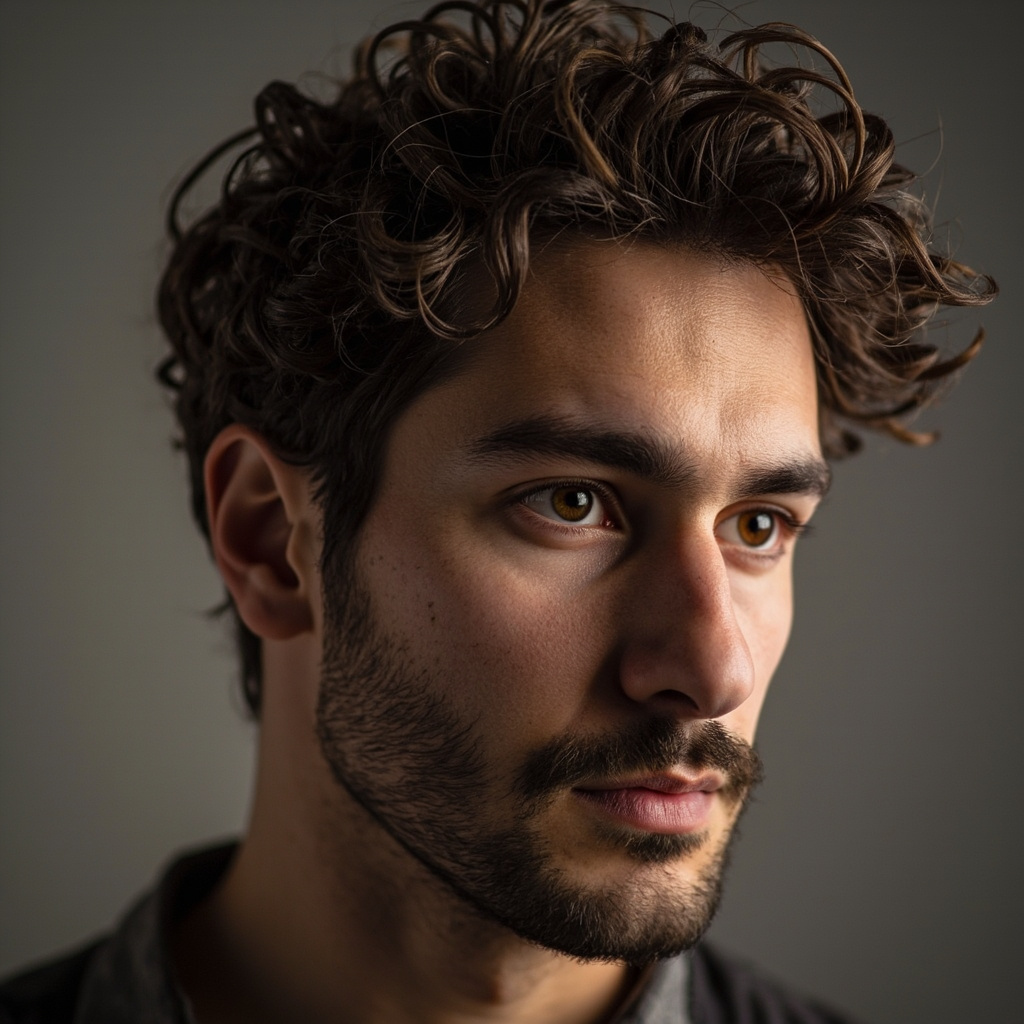
A hard part is a shaved line that separates the fade from the hair on top. It adds precision and definition without being too flashy. On a low taper fade with curly hair, the hard part creates a clean division that makes your curls look intentional and well-groomed.
The part can be placed on either side based on your natural hair growth pattern. Many guys prefer placing it on the side where their hair naturally falls, but you can also create a new part line to change up your look. The placement dramatically affects the overall feel—left side tends to read more traditional, right side more modern.
Maintaining the hard part requires occasional touch-ups. Use an electric trimmer with a close-cutting guard to maintain the line between haircuts. The part fades quickly if ignored, so setting a quick weekly trim into your routine keeps it sharp.
Face shape impact: Hard parts work well with square and oval faces because they create definition around the forehead. For round faces, the part can balance proportions when placed strategically. Discuss placement with your barber to find what works best for your features.
Ask your barber: “Low taper fade with a hard part on the [left/right] side. I want a sharp, clean line that extends from my forehead back toward the crown.”
6. Burst Fade with Curly Top
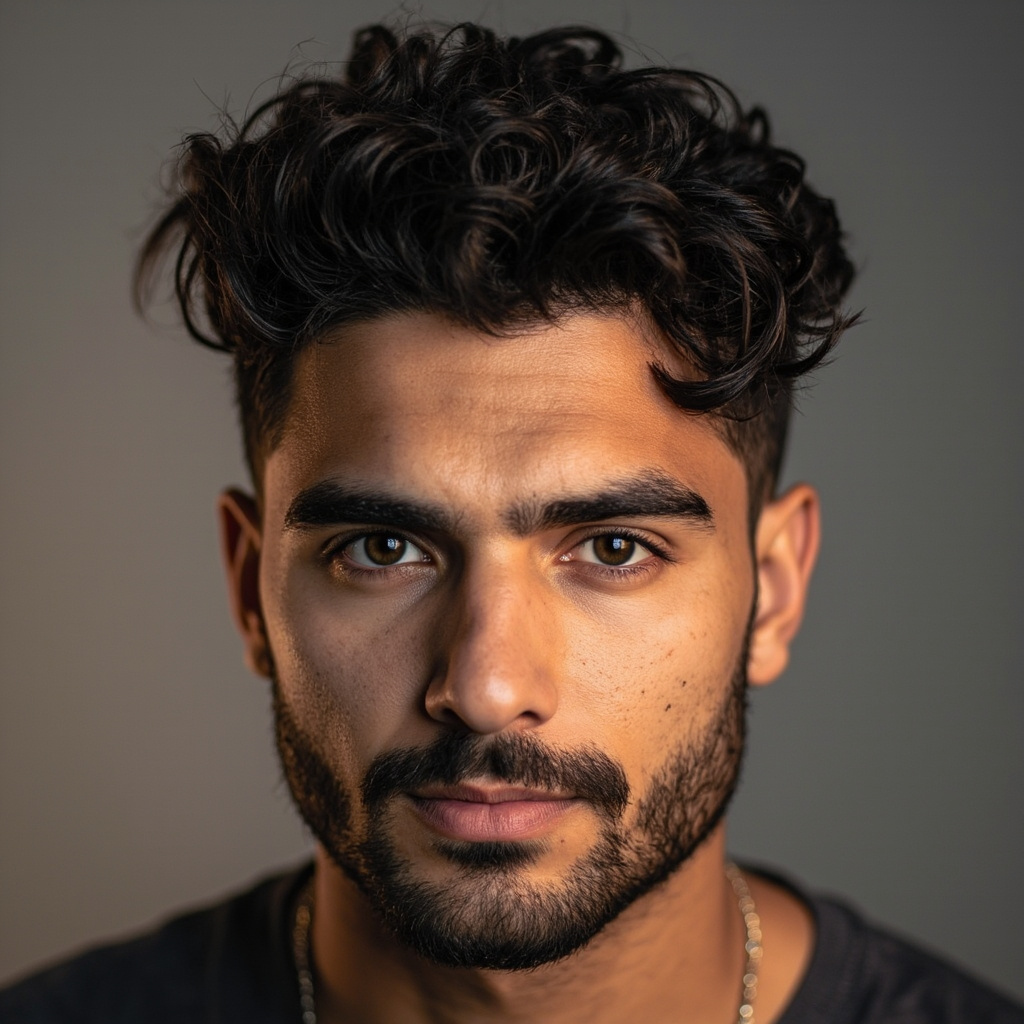
The burst fade is a showstopper. Instead of fading all the way around your head, it radiates outward from around your ear in a sunburst pattern. This creates a dramatic, high-contrast look that’s perfect for guys who want their style to make a statement.
Pairing a burst fade with curly hair is a match made in style heaven. The curls on top create volume and texture that complements the curved fade at the sides. The contrast between the shaved burst area and your natural curls becomes the focal point of your entire look.
Maintenance is key for this style. The burst line needs to stay crisp to look intentional. Schedule haircuts every two to three weeks to keep the burst shape defined. Your curls can go longer between cuts, but the burst area requires more attention.
This style works best for confident individuals who don’t mind the attention it draws. It’s bold without being aggressive, stylish without being over-the-top. If you want a fade that stands out from the crowd, the burst fade with curly top is an excellent choice.
Ask your barber: “Give me a burst fade around my ear—sunburst pattern that curves outward. I want the curls on top to be full and voluminous to match the dramatic sides.”
7. Low Taper Fade with Line Up
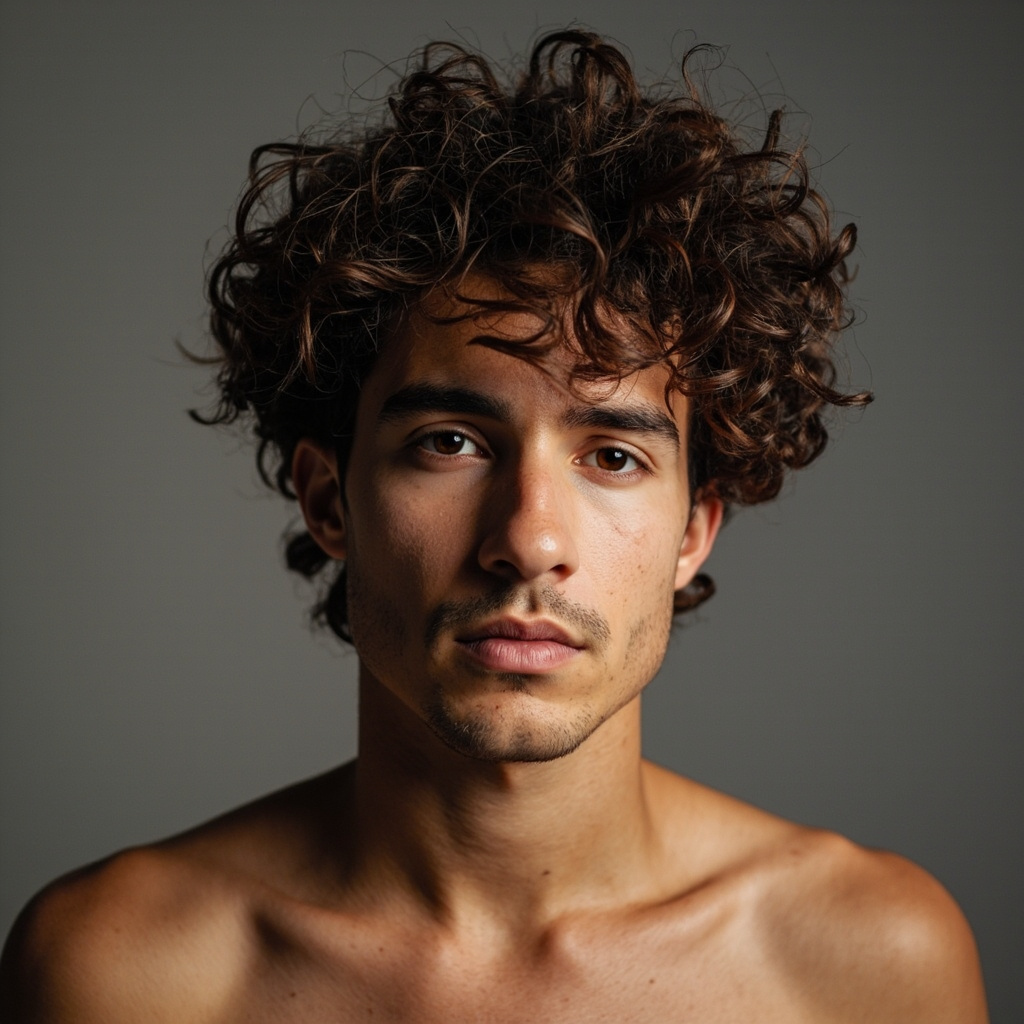
The line up is a crisp, geometric shaved edge along your hairline. Combined with a taper fade, it creates an incredibly clean, sharp look that looks polished and intentional. The line can be subtle or bold depending on how much contrast you want.
For curly hair, the line up works best when the edge is clean but not overly geometric. Your barber should follow your natural hairline while creating a sharp, defined border between the fade and your curls. This maintains a natural look while adding precision.
Line ups require maintenance. The hair along your hairline grows quickly, so plan to touch up the line every week or two with an electric trimmer. Keeping the line sharp is what makes this style look intentional rather than sloppy.
This style suits professional environments where a polished appearance matters. The clean lines add sophistication without being flashy. If you work in a corporate setting but want to express your personal style through your hair, the low taper fade with line up is an excellent compromise.
Ask your barber: “Low taper fade with a line up along my hairline. I want the line to be sharp and clean, defining the border between my fade and curls on top.”
8. Low Skin Fade with Curly Top
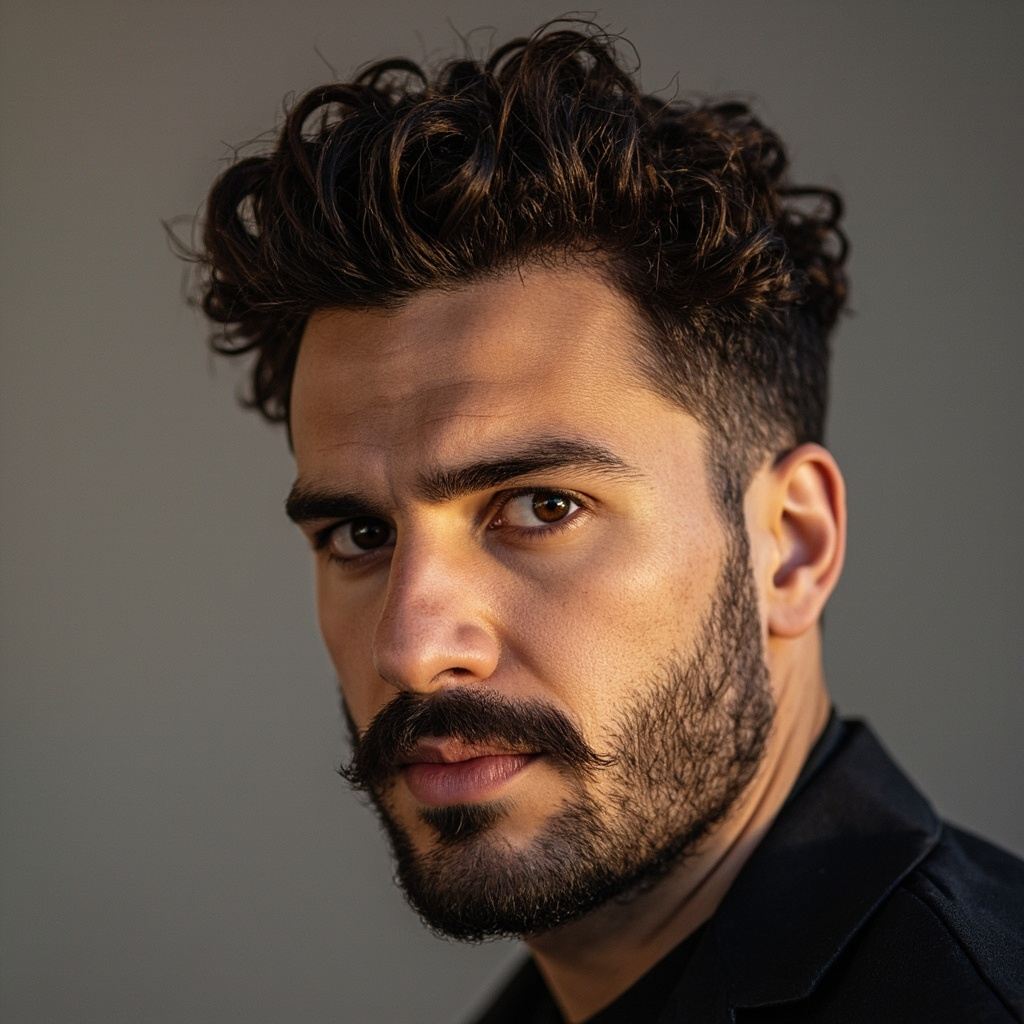
Take the low taper fade all the way to the skin for maximum contrast. A skin fade completely shaves the sides, creating a bold line of demarcation where your curls begin. The result is dramatic and eye-catching, with your curls standing out against the shaved sides.
Skin fades work exceptionally well with thick, voluminous curly hair. The maximum contrast creates a striking silhouette that draws attention to your curls. If you want your natural texture to be the star of the show, the skin fade provides the perfect backdrop.
Be aware that skin fades are high-maintenance. The skin area grows out quickly, so you need haircuts every two to three weeks to keep the look clean. Between cuts, you can maintain the shaved areas with a foil shaver or electric trimmer set very low.
This style is best for guys who are committed to regular maintenance. If you can handle frequent trims, the low skin fade with curly top delivers serious style impact. It’s not a set-it-and-forget-it look—the payoff requires consistent effort.
Ask your barber: “Low skin fade on the sides—I want you to shave all the way down to the skin. Leave my curls long on top, about three to four inches, so they really pop against the shaved sides.”
9. Low Taper Fade with Textured Curls
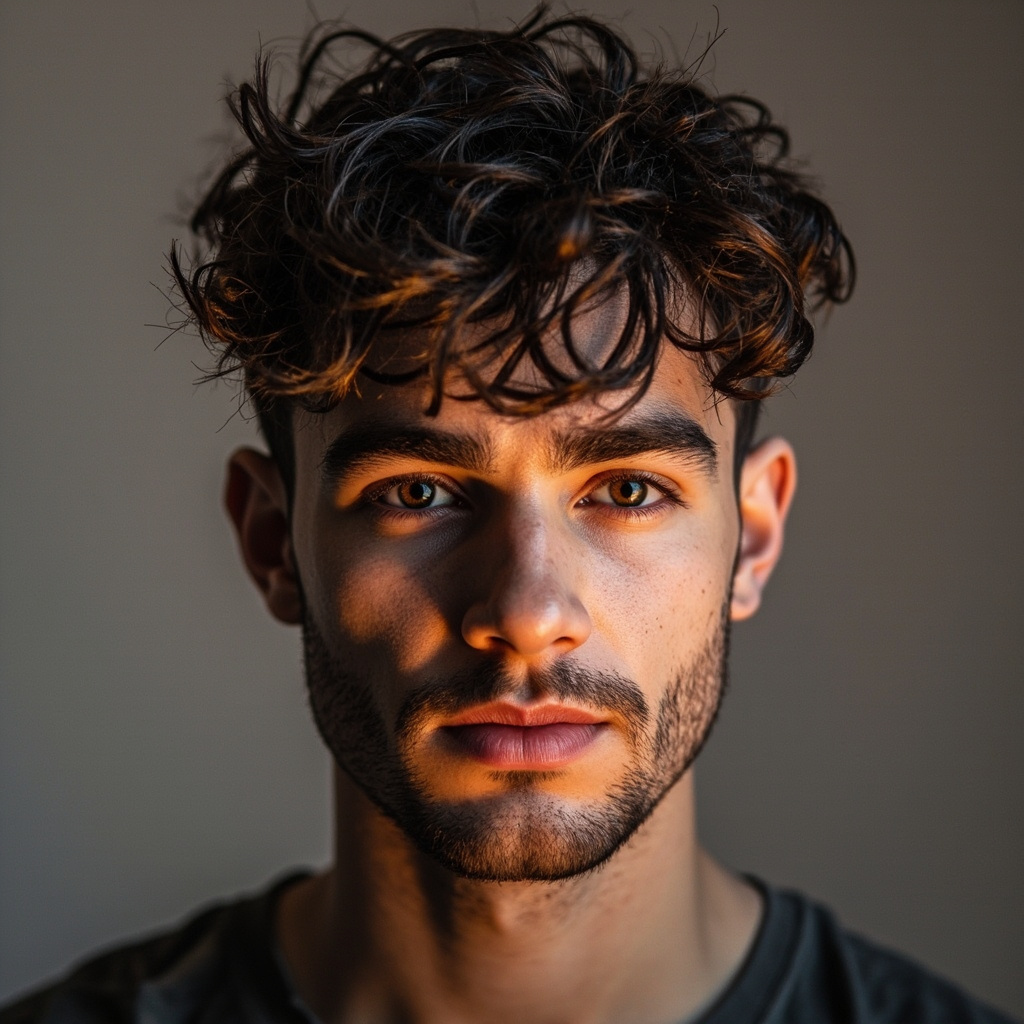
Ask your stylist to add layers or texturizing to your curls. This removes bulk while keeping movement, making your curls easier to style and manage. The texturizing creates definition within the curl mass, preventing that heavy, monolithic look that some curly cuts develop.
Texturizing works by strategically cutting some curls shorter throughout the mass rather than cutting everything to one length. This creates layers within your curls, allowing different sections to behave independently. The result is more movement, better definition, and easier styling.
Not all texturizing is the same. Ask your barber about point-cutting versus slide-cutting techniques. Point-cutting creates texture without removing much length, while slide-cutting can thin out thicker curl patterns more aggressively. Discuss your hair’s behavior and your styling preferences to find the right approach.
This style works well for guys with thicker, heavier curl patterns who struggle with managing volume. The texturizing creates breathing room within your curls, making them easier to style and less likely to become a chaotic mess.
Ask your barber: “Low taper fade with texturizing in my curls on top. I want to remove bulk and add movement while keeping my curls long enough to show their natural pattern.”
10. Low Taper Fade with Fringe
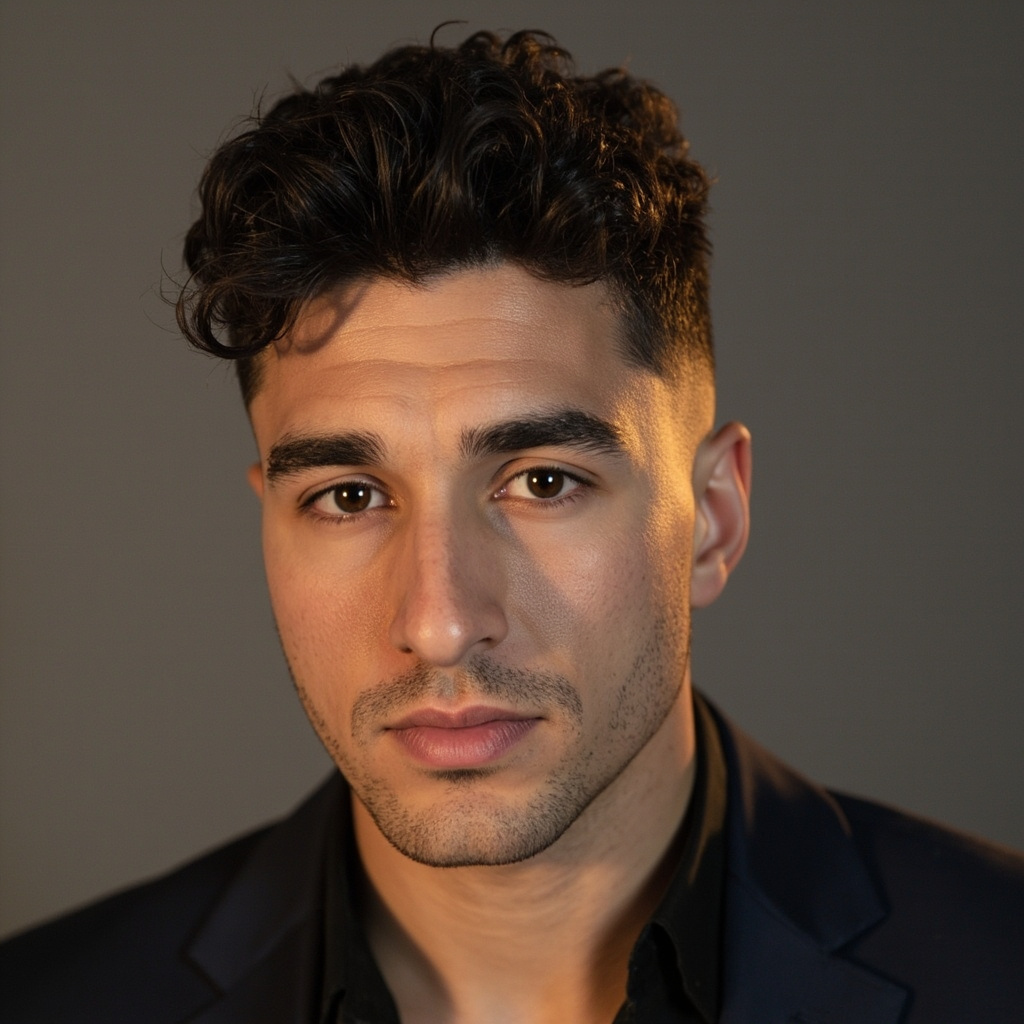
Let your curls fall forward into bangs or a fringe. This softens your face and creates a relaxed, approachable vibe. The fringe can be subtle—just your curls slightly covering your forehead—or dramatic, with longer curls swept heavily forward.
The key to a good fringe is managing the length. Your curls need to be long enough to fall forward convincingly, but not so long that they obscure your vision or become unmanageable. Work with your barber to find the right length for your curl pattern and forehead shape.
Styling a curly fringe requires product commitment. A lightweight styling cream or foam keeps your fringe defined without stiffness. Avoid heavy gels that can make fringe areas look greasy or weighed down. The goal is soft, natural movement.
This cut works particularly well for guys with rounder face shapes. The fringe adds vertical lines that elongate the face, creating better proportions. It also draws attention to your eyes, which can be flattering if you have expressive features.
Ask your barber: “Low taper fade, but leave my curls long enough to create a fringe that falls forward across my forehead. I want it to look natural and soft, not styled or stiff.”
11. Low Taper Fade with Quiff
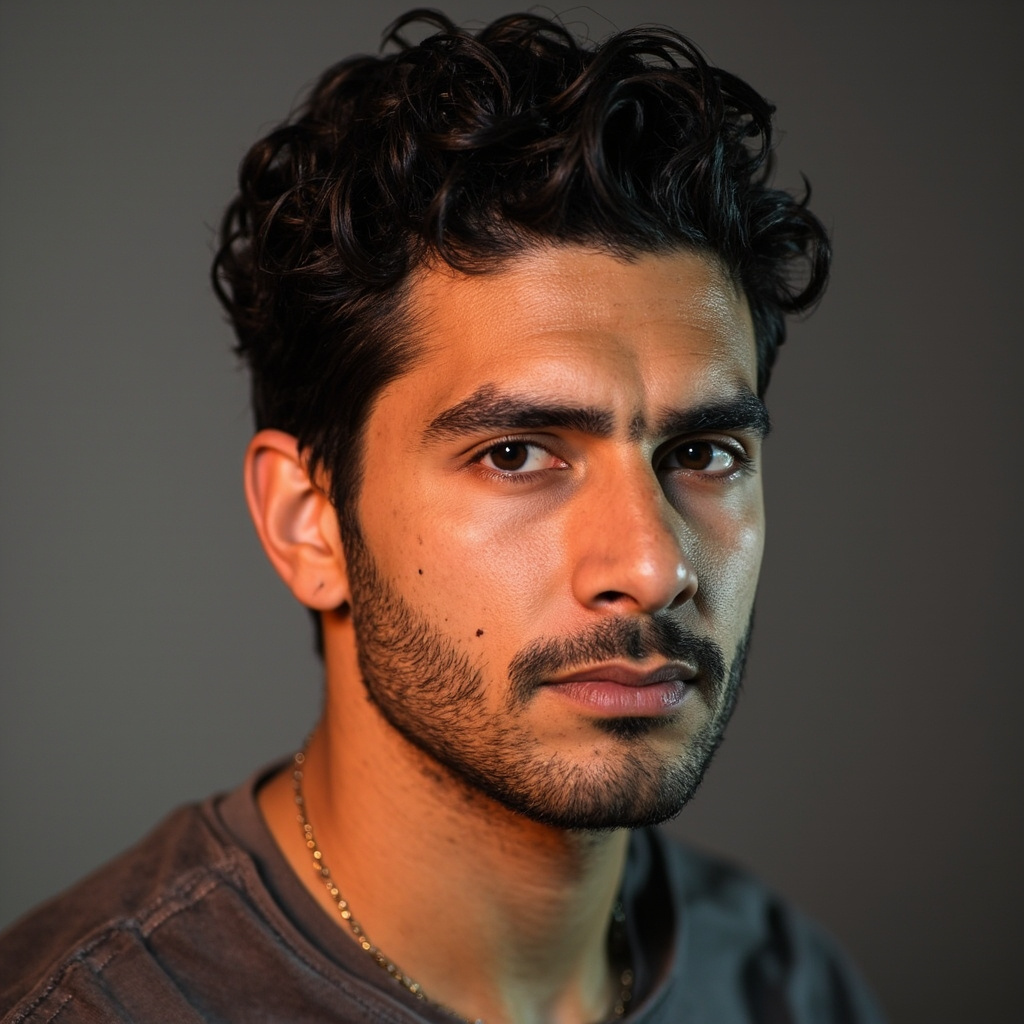
The quiff pulls hair up and back from the forehead, creating dramatic height that works beautifully with curly textures. Unlike the slick, combed quiffs of the 1950s, the curly quiff embraces your natural texture while creating that signature swept-back silhouette.
Building a curly quiff requires strategic length distribution. Your barber should leave the front section of your curls longer than the sides, creating a gradient that naturally encourages the quiff shape. Use a blow dryer with a diffuser attachment and a round brush to lift and shape your curls while drying.
Product selection matters for quiff styles. A medium-hold pomade or styling cream provides the hold needed to keep your quiff in place while maintaining flexibility. Avoid stiff gels or waxes that will flatten your curls—the quiff works because of the height and volume, not despite it.
The quiff flatters taller forehead areas by adding fullness at the crown. It balances elongated face shapes by creating horizontal visual interest. If you have a shorter forehead, keep the quiff more subtle to avoid overwhelming your features.
Ask your barber: “Low taper fade with a curly quiff. Leave the front section of my curls longer—about three to four inches—so I can sweep them up and back. Create a gradient that supports the quiff shape.”
12. Low Taper Fade with Slicked Back Curls
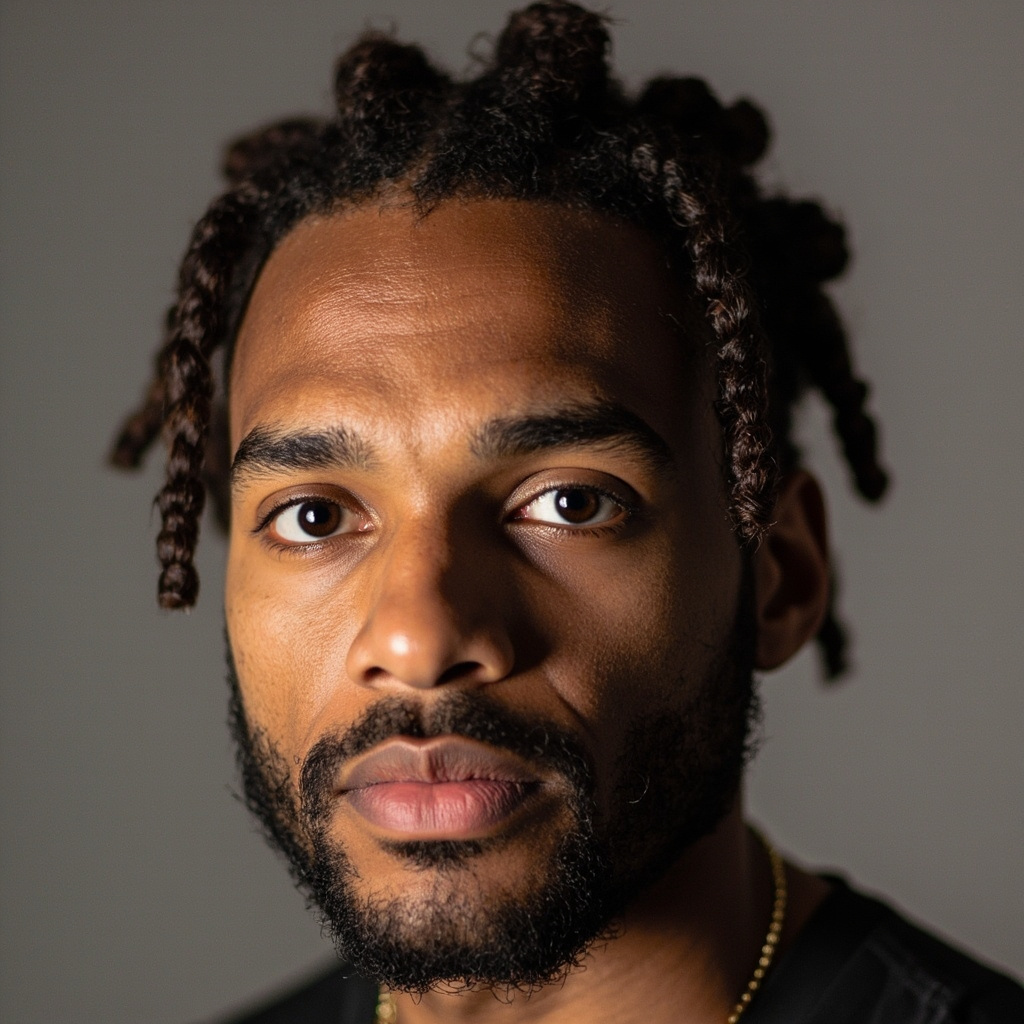
Sometimes curls don’t want to cooperate, and that’s okay. Slicking them back with product gives you a sleeker, more refined look while still maintaining some natural texture. It’s the perfect compromise between embracing your curls and looking polished for formal occasions.
To achieve this look, apply a strong-hold pomade or wax when your hair is towel-dried. Use a comb to work your curls back away from your face, then finish with a blast of cool air from your blow dryer to set the style. The result is a refined look with subtle texture you can see and feel.
The slicked-back approach works well for professional environments or special occasions when your natural curly look might feel too casual. It’s especially effective for square and oval face shapes, where the swept-back style creates a strong, defined profile.
Be aware that slicking back your curls is a temporary transformation. Your natural curl pattern will reassert itself as the day progresses, typically within four to six hours. If you need all-day hold, use a strong-hold hairspray as a final step.
Ask your barber: “Low taper fade, and leave my curls long enough to slick back. I want about three inches on top so I can create a refined, swept-back look when I use product.”
13. Low Taper Fade with Twisted Top
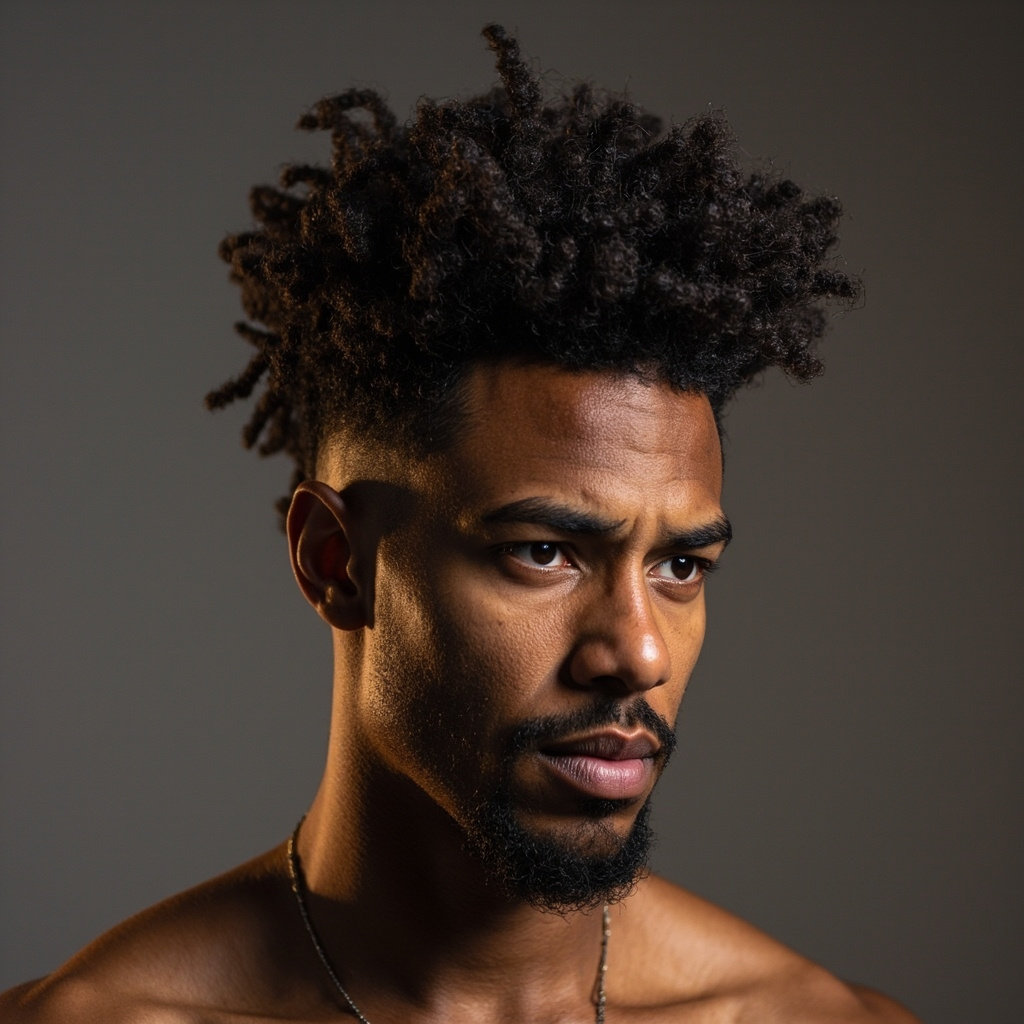
Two-strand twists on top paired with a taper fade create a neat yet expressive look. It’s a protective style that grows out gracefully and offers a distinctive texture that sets you apart from more conventional curly styles. The twists add visual interest and cultural resonance.
Twists require a certain length to install—typically at least three inches of hair on top. Once installed, they can last for one to two weeks with proper maintenance. This makes them excellent for guys who want a low-maintenance style that still looks intentional and styled.
Maintaining twists involves regular moisturizing and re-twisting any sections that start to unravel. Use a lightweight oil or twist spray to keep your scalp and twists hydrated. When removing twists, be gentle—rushing can damage your natural curl pattern at the roots.
This style works well for curly hair types 3B through 4C, where the natural curl pattern creates tight, defined twists. It’s particularly popular in Black hair communities but has crossed over to mainstream style acceptance in recent years.
Ask your barber: “Low taper fade with two-strand twists on top. I want the twists to be neat but not too uniform—looking natural and textured. Leave enough length for the twists to hang comfortably.”
14. Low Taper Fade with Fro
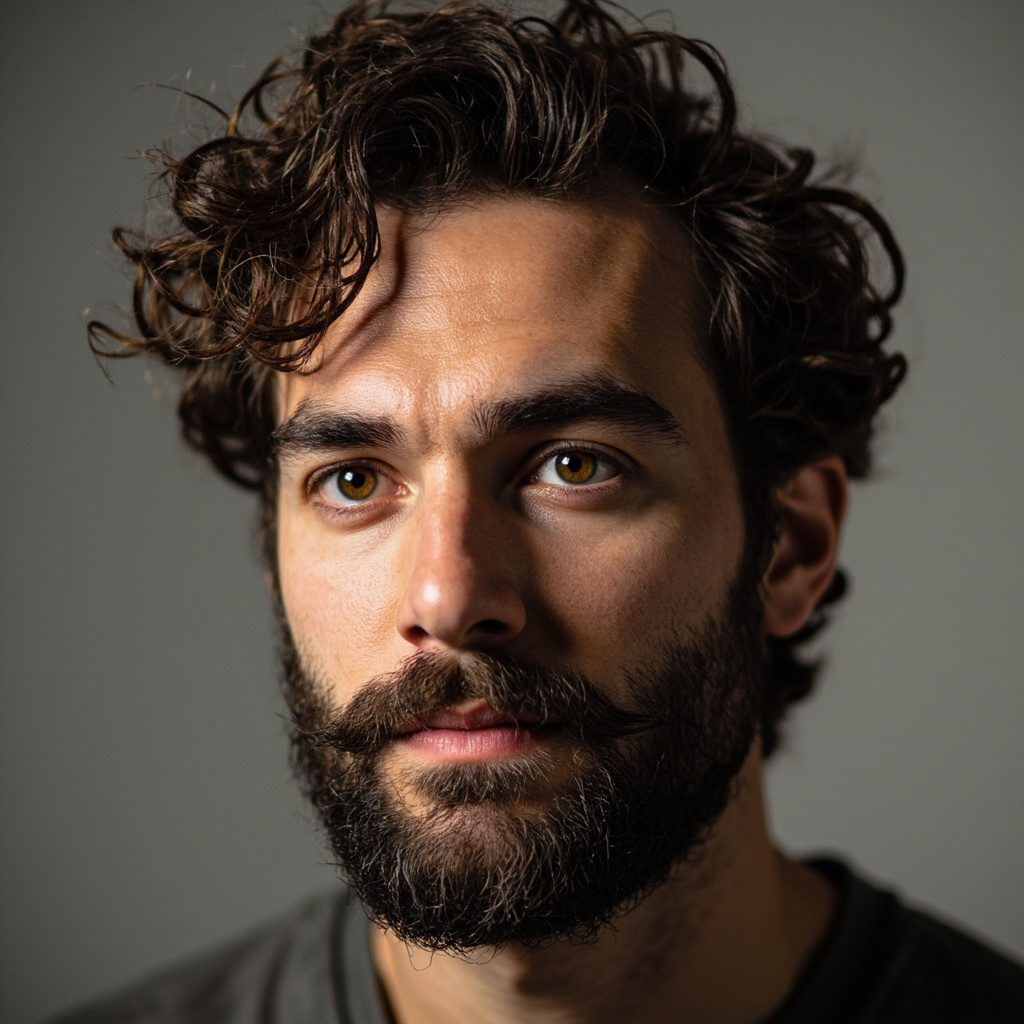
Embrace maximum volume. A big curly afro on top with a low fade at the sides is powerful and surprisingly low-maintenance. The afro creates a bold statement while the fade keeps your sides neat and prevents the style from looking unkept.
The key to a good fro is letting your curls grow and expand naturally. Unlike more structured styles that require daily styling, the afro benefits from minimal manipulation. Use a pick or wide-tooth comb to shape your fro in the morning, then let it do its thing.
Face shape matters for this style. The fro adds height and width, which can overwhelm smaller faces or shorter individuals. If you’re shorter or have a small frame, consider a more moderate fro size that complements rather than dominates your proportions.
Moisture is critical for healthy afros. Dry hair causes frizz and breakage, which undermines the style. Use a leave-in conditioner and seal with a heavier oil or butter to keep your curls hydrated and your fro looking its best.
Ask your barber: “Low fade on the sides—nothing too dramatic. I want to grow out a full fro on top. Just keep the sides neat and let my natural curl pattern take over.”
15. Low Taper Fade with Curls and Beard
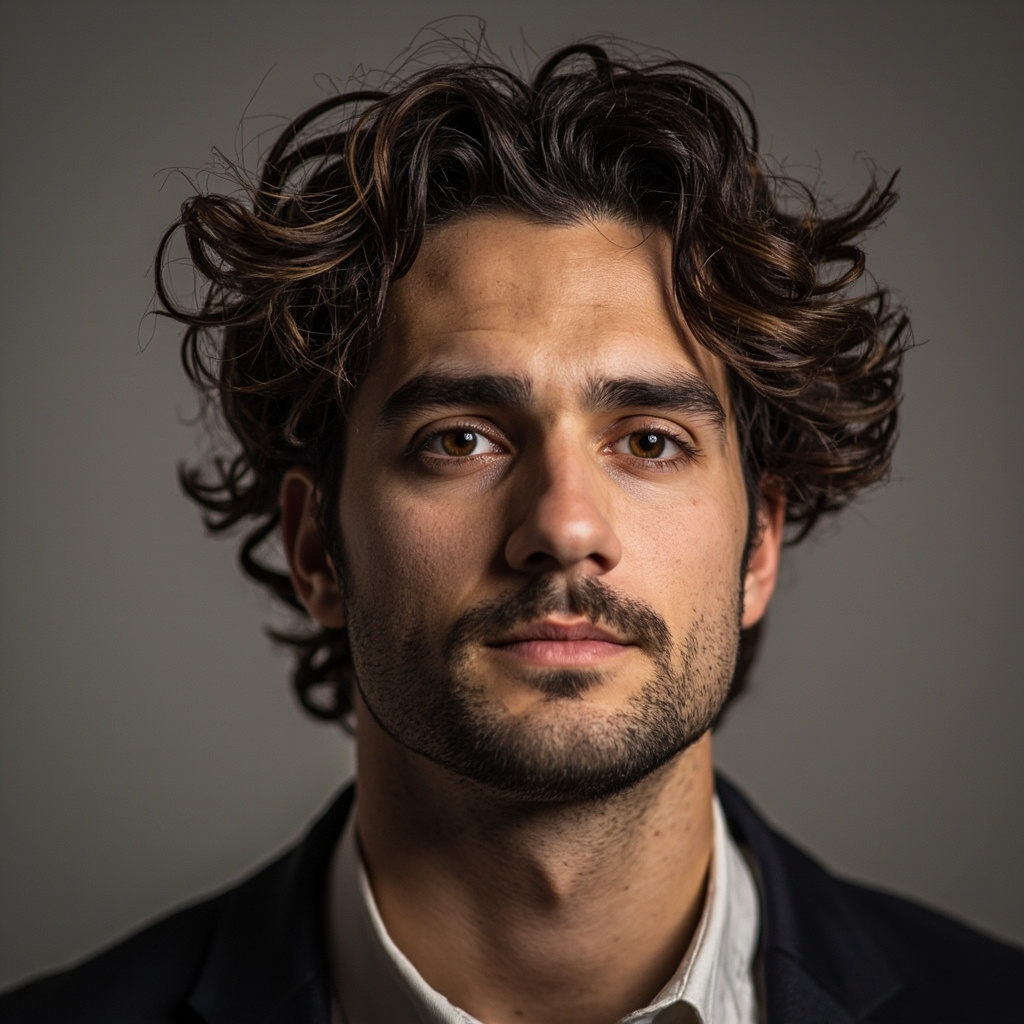
The fade creates a perfect transition into your beard. This combination is endlessly versatile—you can go from subtle to statement-making depending on beard length. The key is ensuring the fade line connects smoothly with your beard rather than creating an awkward gap.
For the best results, communicate with your barber about both your hair and beard expectations. The fade should end at a height that allows your beard to pick up naturally, creating a continuous gradient from the shaved sides through your beard area.
Beard maintenance becomes more important with this style. A well-groomed beard elevates the entire look, while an unkempt beard can undermine your effort. Invest in quality beard scissors and an electric trimmer to maintain your beard between professional grooming sessions.
This style works for most beard lengths, from stubble to full beard. The longer your beard, the more dramatic the contrast with the faded sides. Match the intensity of your fade to your beard length for a cohesive overall appearance.
Ask your barber: “Low taper fade with a fade that connects into my beard. I want a smooth transition where my hair fades into my facial hair naturally. Keep the sides clean to frame my beard.”
16. Low Taper Fade with Highlights
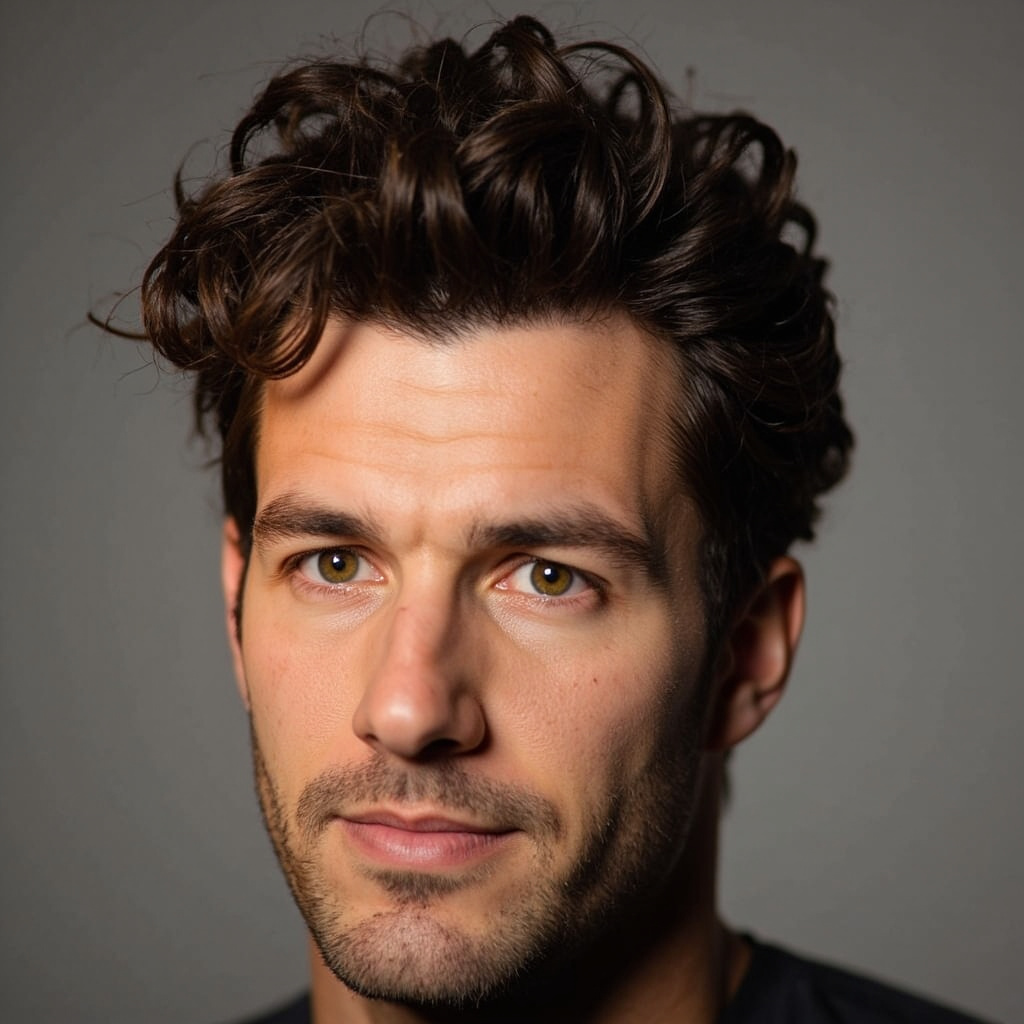
Add dimension with subtle highlights or lowlights. They enhance curl definition and make your style look more expensive without being drastic. For curly hair, highlights create depth that makes each curl stand out individually rather than blending together.
Balayage or hand-painted highlights work better than traditional foil highlights for curly hair. The freehand technique follows your natural curl pattern, creating a more organic, sun-kissed effect. It’s less maintenance because the highlights grow out naturally rather than showing obvious roots.
Color choices range from subtle brown lowlights for depth to bold blonde or red highlights for drama. Start conservative—it’s easier to add more color later than to remove too much. A skilled colorist can enhance your curls without looking artificial or overdone.
Maintenance for colored curly hair involves moisture and color protection. Colored hair tends to be drier, so increase your conditioning routine. Use color-protecting products to maintain the vibrancy of your highlights between salon visits.
Ask your barber: “Low taper fade with subtle highlights. I want balayage-style color that follows my curl pattern, creating natural-looking dimension. Nothing too dramatic—just enough to enhance my curls.”
17. Low Taper Fade with Side Part
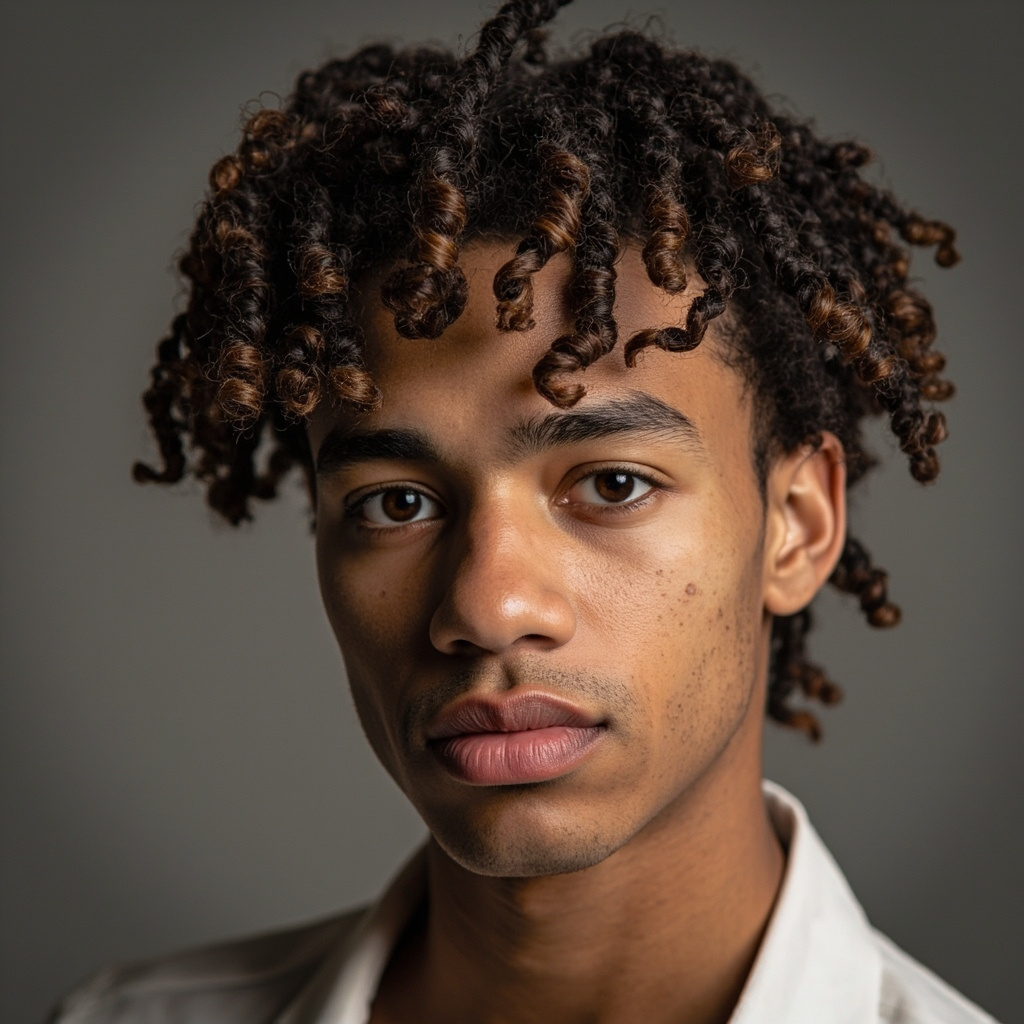
Classic and reliable. The side part adds structure while the curls add personality. It works for any occasion from casual to business, making it one of the most versatile curly fade variations you can choose. The side part creates organization within your curls.
Creating the part requires your barber to shave a line that separates your curls into two sections. The larger section is combed to one side while the smaller section lays flat on the other side. The part line itself can be subtle or dramatic depending on your preference.
To maintain the part at home, use a comb while your hair is damp to reinforce the line daily. A small amount of pomade applied along the part line can help it stay sharp throughout the day. Regular trimming keeps the part line clean and defined.
This style flatters most face shapes and hair types. It’s particularly effective for guys with medium-density curly hair that tends to fall in consistent patterns. If your curls are extremely chaotic, the side part can help impose some order while maintaining your natural texture.
Ask your barber: “Low taper fade with a side part. I want a clean part line that separates my curls into two sections, with the larger section swept to the [left/right]. Make the part line subtle but defined.”
18. Low Taper Fade with Sponge Curls
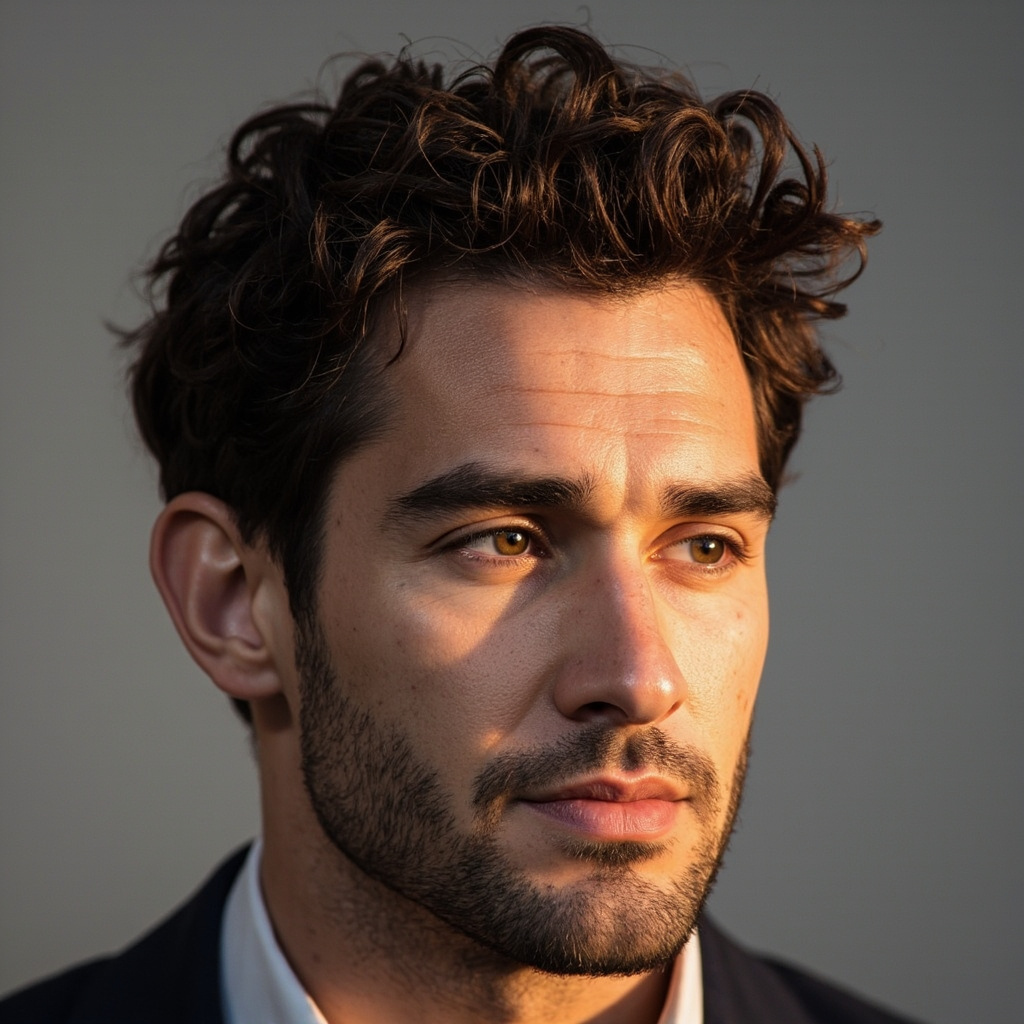
Use a sponge curl former on your low fade for tight, uniform ringlets. It’s quick, easy, and creates an incredibly clean look that stands out from more natural curly styles. The sponges create consistent curl patterns that look intentional and stylized.
Sponge curl formers are small, textured sponges you roll over your hair to create uniform curls. They’re affordable, easy to use, and create results in minutes. For the best effect, apply a light curl-enhancing product before using the sponge, then roll in sections until your entire head is covered.
The resulting look is distinctive and eye-catching. If you want your curls to look styled rather than natural, sponge curls deliver that aesthetic. They’re especially popular in military and athletic communities where a clean, uniform appearance matters.
Face shape considerations: Sponge curls add texture and visual interest throughout your head. For rounder faces, this can balance proportions. For longer faces, keep the curls moderate in volume to avoid emphasizing length.
Ask your barber: “Low taper fade, and leave my curls long enough to create ringlet curls with a sponge curl former. I want tight, uniform curls that look intentionally styled.”
19. Low Taper Fade with Brush Forward
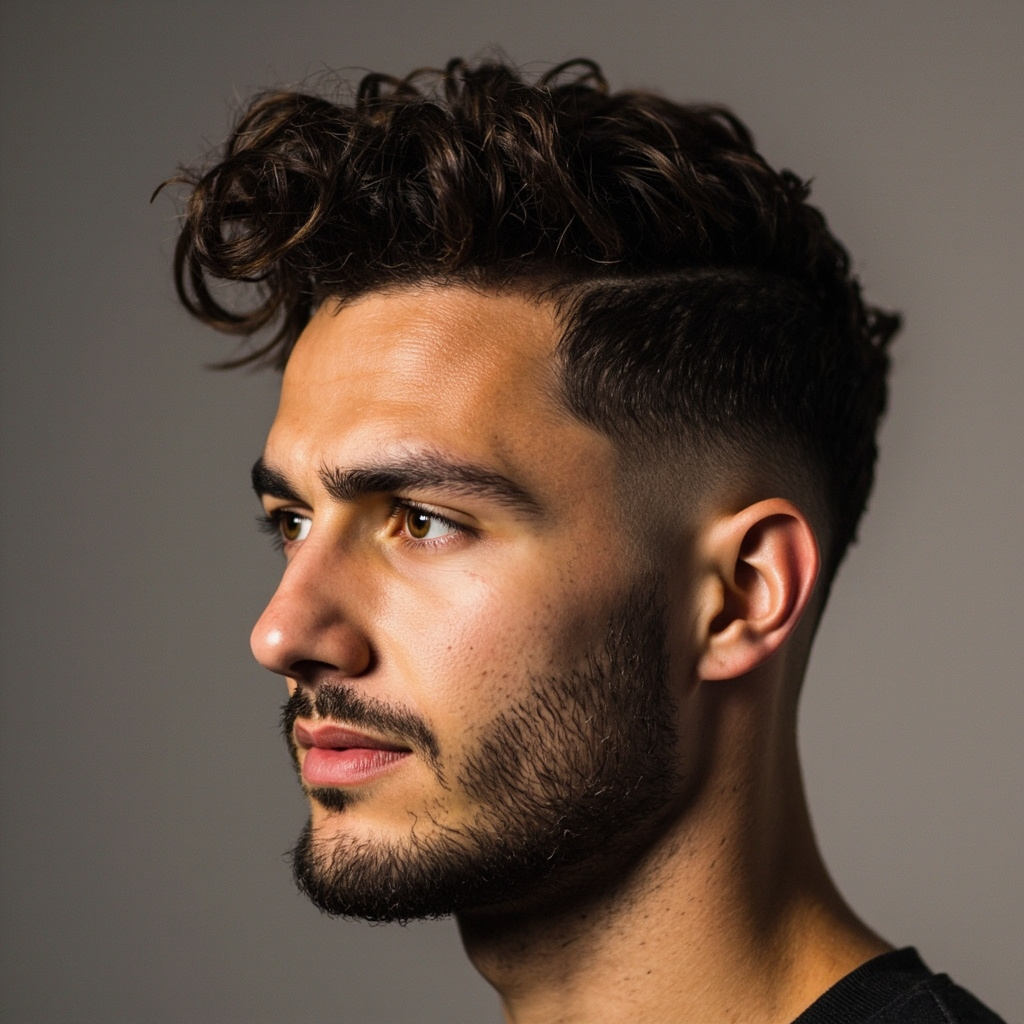
Brush all your curls forward toward your face. This creates a bold, forward-moving shape that’s modern and distinctive. The style has an architectural quality that looks deliberate and artistic, standing out from more conventional curly fade approaches.
Styling requires a brush and a quality styling product. Apply the product to damp hair, then brush from back to front in sections, working your way from your crown toward your forehead. The result should be curls swept forward creating a frame around your face.
This look works particularly well with longer curly hair, where the forward motion creates an interesting silhouette. The style is bold enough to work as a statement look but refined enough for professional environments when executed properly.
Maintenance is moderate. You need to brush your hair forward every morning to maintain the look, which can be time-consuming if your curls tend to resist styling. Using a lightweight product that provides some hold helps the style last throughout the day.
Ask your barber: “Low taper fade, and leave my curls long enough to brush forward. I want a forward-falling silhouette where all my curls sweep toward my face, creating an architectural frame.”
20. Low Taper Fade with Disconnected Undercut
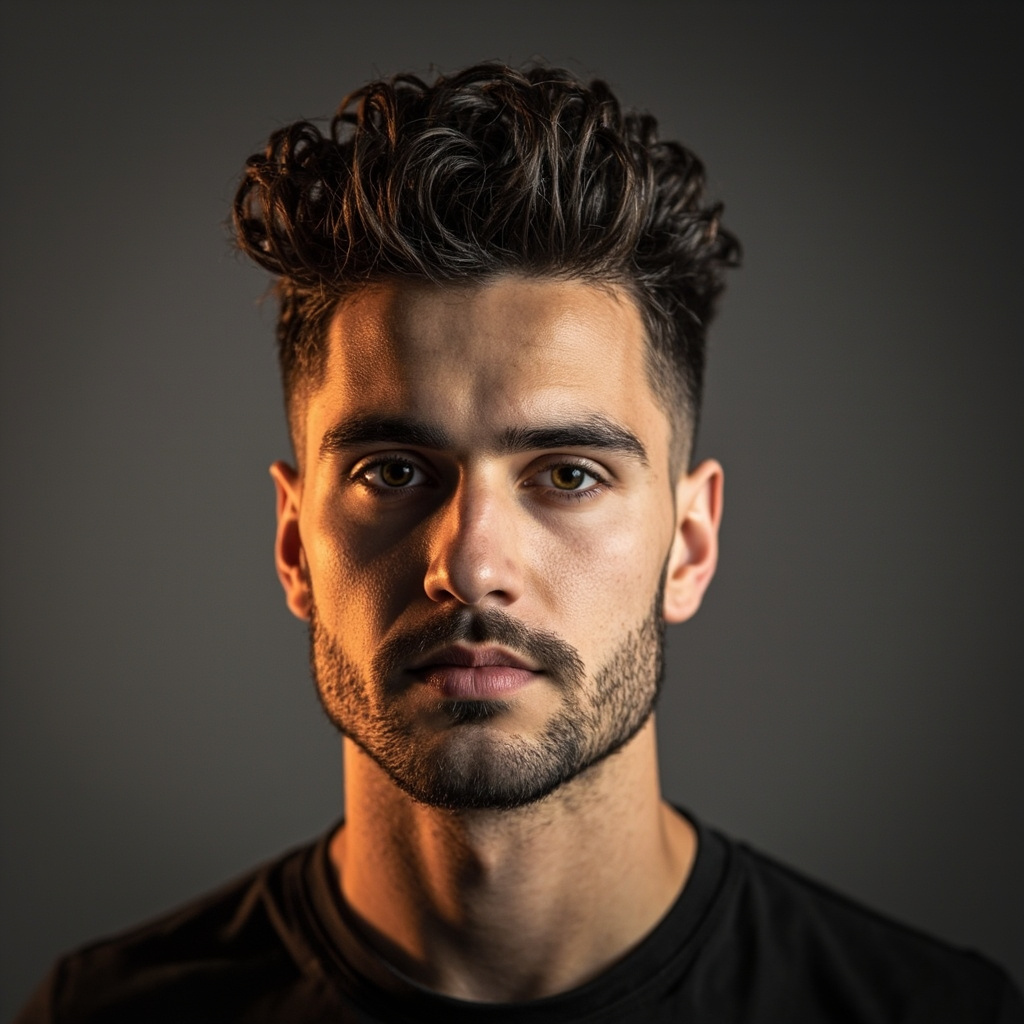
Go for a full disconnect—the fade and the curls on top have no transition between them. It’s bold, edgy, and definitely not for everyone. The disconnected undercut creates a dramatic line where the shaved sides meet the curly crown without any gradual transition.
This style requires confidence to pull off. The disconnect is intentionally stark, creating a visual break that demands attention. If you want a style that makes a statement, the disconnected undercut delivers that impact more effectively than any other curly fade variation.
Face shape matters here. The disconnect adds visual weight to the top of your head, which can balance a narrow chin or lower-heavy face shape. However, if you have a wider forehead or taller face, the disconnected look might emphasize those proportions unfavorably.
Maintenance is straightforward but committed. The disconnect line needs to stay crisp, requiring regular trims of the faded sides. Your curls can grow longer since there’s no transition to maintain, but the stark line at the disconnect requires attention.
Ask your barber: “I want a disconnected undercut. Low fade on the sides with a hard line where it meets the top—no transition or gradient. My curls on top should be completely disconnected from the shaved sides.”
21. Low Taper Fade with Pompadour
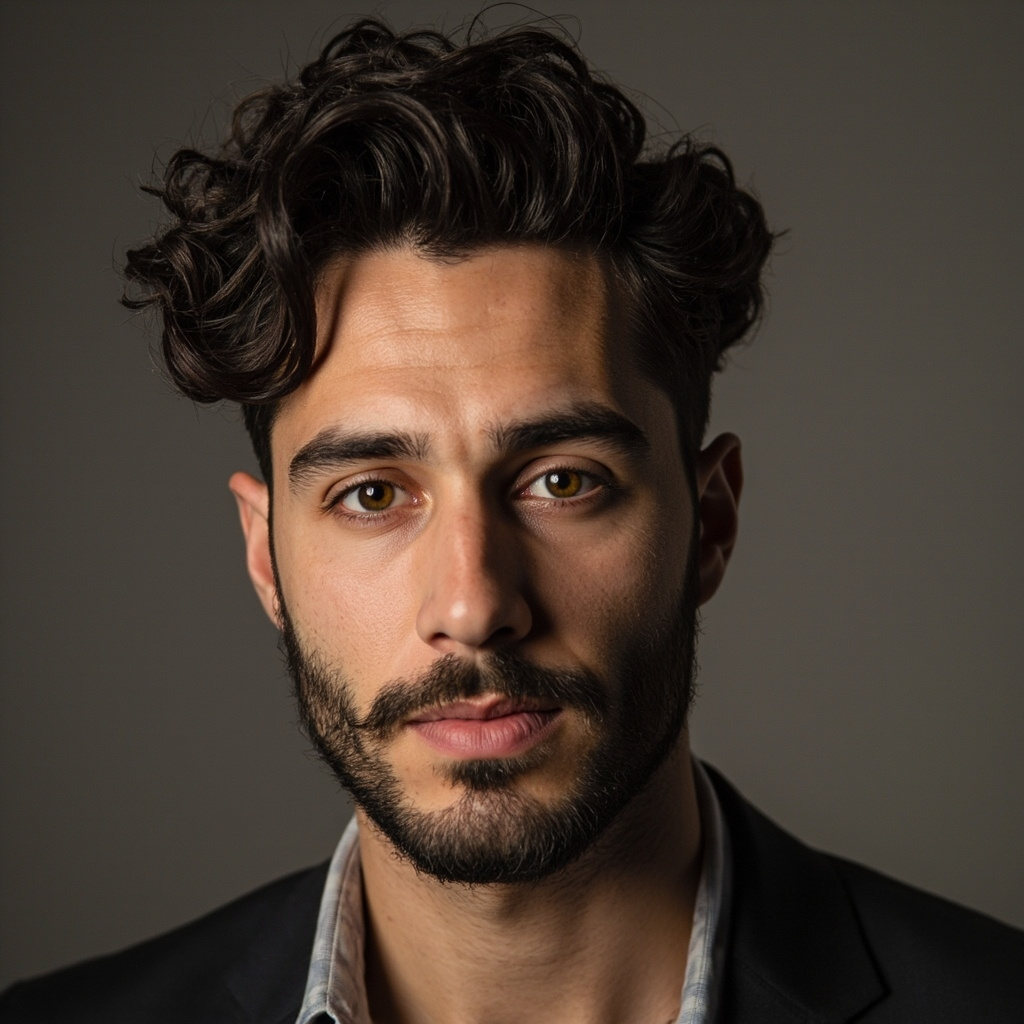
The pompadour adds height and volume at the front. With curls, it gets a more relaxed, modern feel than the classic slick version. The curly pompadour is contemporary without being trendy—it works for guys who want height and presence without the formal commitment.
Building the pompadour requires strategic length distribution. Your barber should leave the front section significantly longer than the back, creating a gradient that naturally encourages the Pompadour shape. The top curls are swept up and back, creating volume at the front.
Styling involves lifting your curls while blow-drying, then shaping them into the pompadour silhouette. Use a round brush and directional blow-drying to encourage your curls to stand up and back. Finish with a medium-hold pomade to keep everything in place.
This style flatters taller forehead areas and longer face shapes by adding horizontal balance. The height at the front creates visual interest that draws attention upward, balancing elongated features. If you have a shorter forehead, keep the pompadour more moderate.
Ask your barber: “Low taper fade with a curly pompadour. Leave the front section significantly longer—four to five inches—so I can sweep my curls up and back. Create the volume and height that defines a pompadour.”
22. Low Taper Fade with Defined Curls
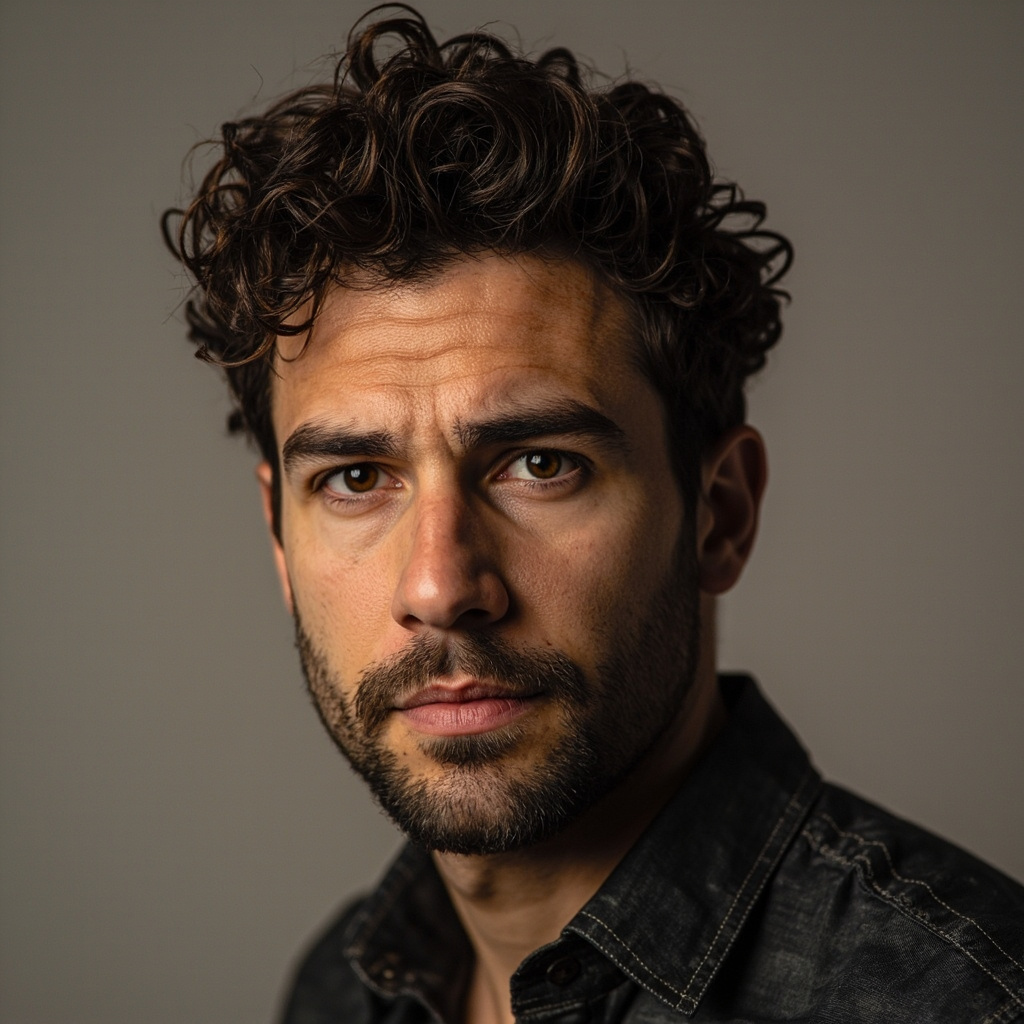
Use curl cream and finger coils to create highly defined, separated curls. The clean fade at the sides makes the detail on top really stand out. This style is for guys who want to show off their curl pattern with precision and intention.
Creating defined curls requires time and patience. Start with freshly washed, damp hair. Apply a generous amount of curl-defining cream, then use your fingers to shape individual curls into distinct coils or spirals. The process takes ten to fifteen minutes but delivers impressive results.
The defined curl style works best when your natural curl pattern is consistent and tight. If your curls are loose or wavy, the defined look might not be achievable without additional styling techniques. Discuss your curl pattern with your barber to determine if this style is realistic for your hair.
Face shape considerations: The defined curl style adds texture and visual interest throughout your head. It works well with most face shapes, particularly those that benefit from added detail and movement at the crown.
Ask your barber: “Low taper fade, and leave my curls long enough to create defined, separated curls using styling techniques. I want my curl pattern to be the star—crisp, distinct coils that stand out from the clean faded sides.”
23. Low Taper Fade with Natural Texture
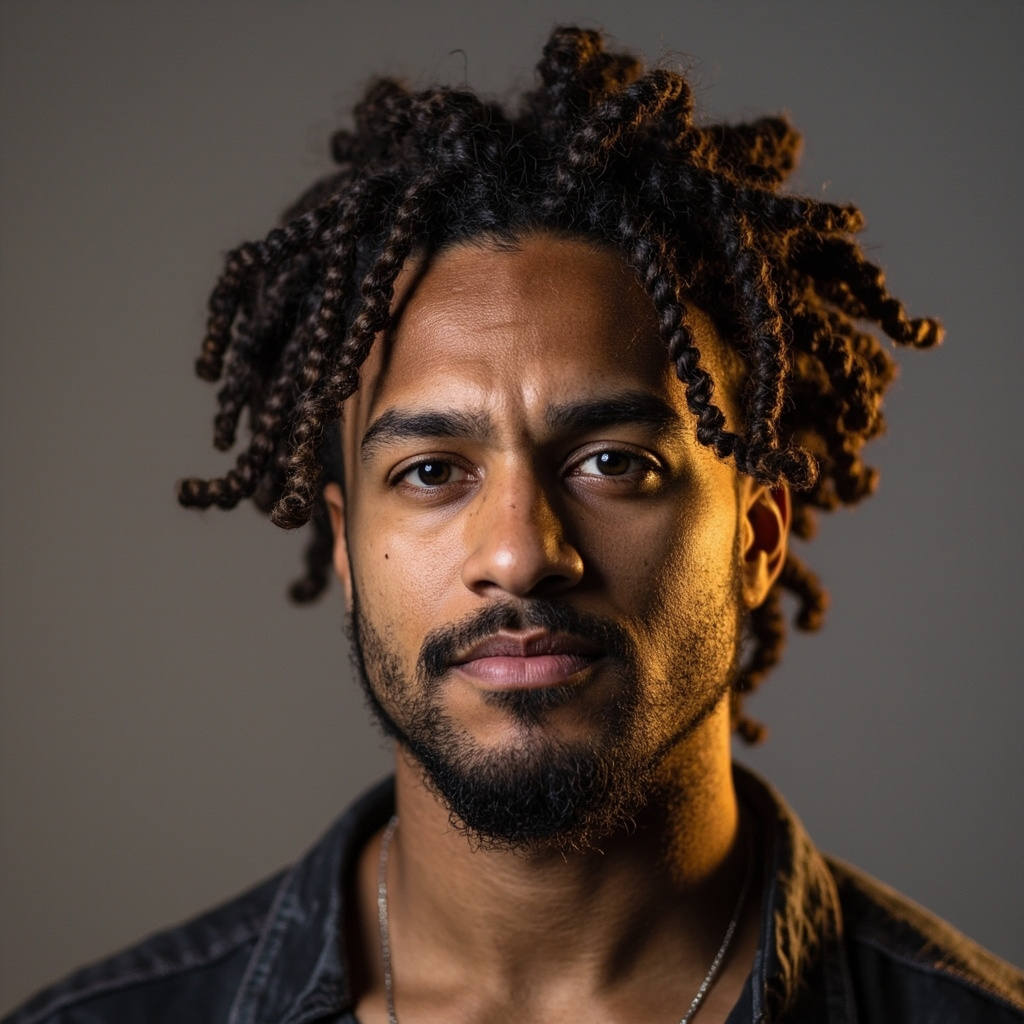
Sometimes less is more. Let your hair do its thing with minimal product and styling—the fade does all the heavy lifting for looking polished. This approach embraces your natural texture completely, using the fade for structure while your curls provide character.
Going natural requires accepting that your curls will behave unpredictably. Some days they might look perfect; other days they might be chaotic. That’s the nature of embracing natural texture. The trade-off is less daily styling effort in exchange for more variable results.
The fade provides the structure that makes natural texture look intentional rather than neglected. Without the clean sides, natural curls can look unkempt. With the fade, even messy curls look styled—there’s a clear effort at the sides even if the top is left to its own devices.
This style suits guys who value low-maintenance routines and appreciate their natural curl pattern. If you love your curls exactly as they grow, this approach honors that while maintaining visual polish through the fade.
Ask your barber: “Low taper fade with natural texture on top. I want to keep my curls completely natural—no texturizing, no styling direction. Just clean sides and whatever my curls naturally do on top.”
24. Low Taper Fade with Braids
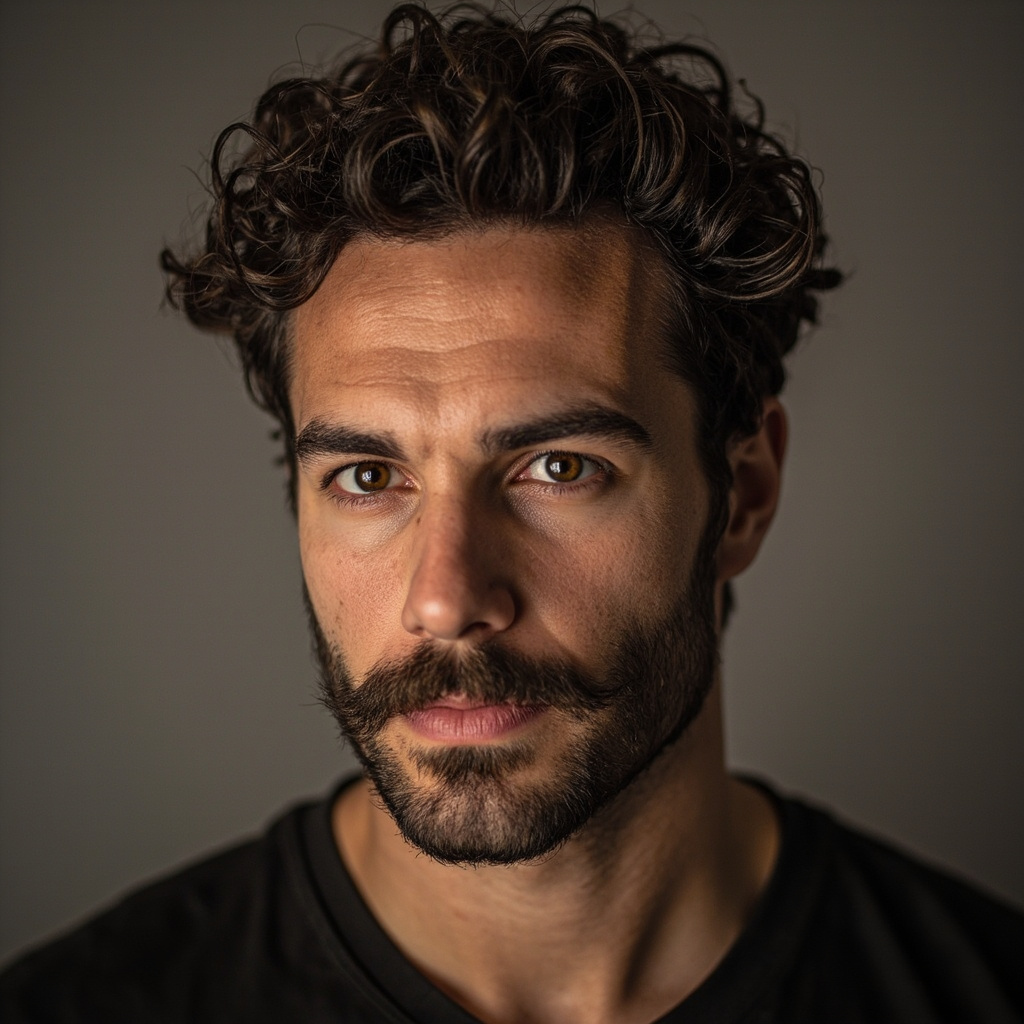
Add small braids at the front while keeping most of your curls loose. The taper fade keeps everything neat at the sides while braids add cultural texture and visual interest. This hybrid approach offers variety and the ability to switch between braided and loose styling.
The braids can be cornrows, individual braids, or twist braids depending on your preference and hair type. Leave the back and majority of your curls loose while braiding the front section. The result is a style with clear cultural roots that works in most environments.
Braiding requires skill and time. If you’re not comfortable doing it yourself, visit a stylist who specializes in braided styles. The braids typically last one to two weeks, making this a relatively low-maintenance style between installations.
This style works particularly well for curly hair types 3B through 4C. The braids protect the front section of your hair while the loose curls in the back showcase your natural texture. It’s an excellent option for guys who want versatility in their styling.
Ask your barber: “Low taper fade with braids in the front section. I want small, neat braids at the front—[cornrows/twist braids/individual braids]—while keeping the rest of my curls loose on top. Maintain clean faded sides.”
25. Low Taper Fade with Faux Hawk
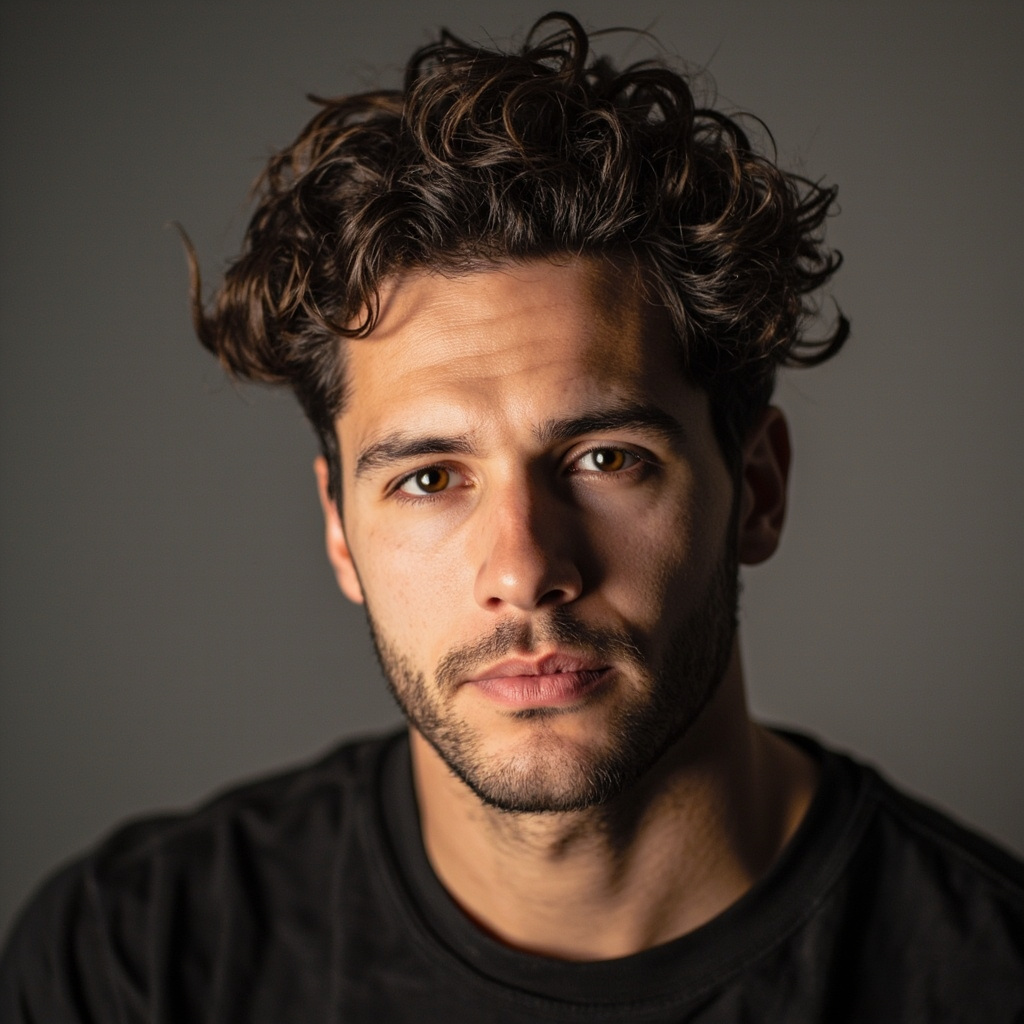
The faux hawk is less commitment than a real mohawk but still makes a statement. The curls create the height while the fade keeps sides clean. It’s punk without being extreme—a style that works in creative environments while remaining acceptable in more conservative settings.
Creating the faux hawk requires gathering your curls at the center of your head, then styling them upward to create a crest. The sides remain faded, creating the mohawk silhouette without shaving the sides entirely. The result is a style with clear attitude that doesn’t require the full mohawk commitment.
Styling involves applying a strong-hold product, then gathering and shaping your curls into the faux hawk shape. Use your hands and a comb to encourage the hairs to stand up and back. A blow dryer with a diffuser can help add volume and set the style.
This style works well for guys with confident, expressive personalities. It draws attention and works best when you’re comfortable being the center of attention. If you prefer低调 styles, the faux hawk might be too bold for your comfort level.
Ask your barber: “Low taper fade with a faux hawk. I want to keep my curls long enough to create a mohawk-style crest down the center—about three to four inches. Keep the sides faded but not completely shaved.”
26. Low Taper Fade with High Curls
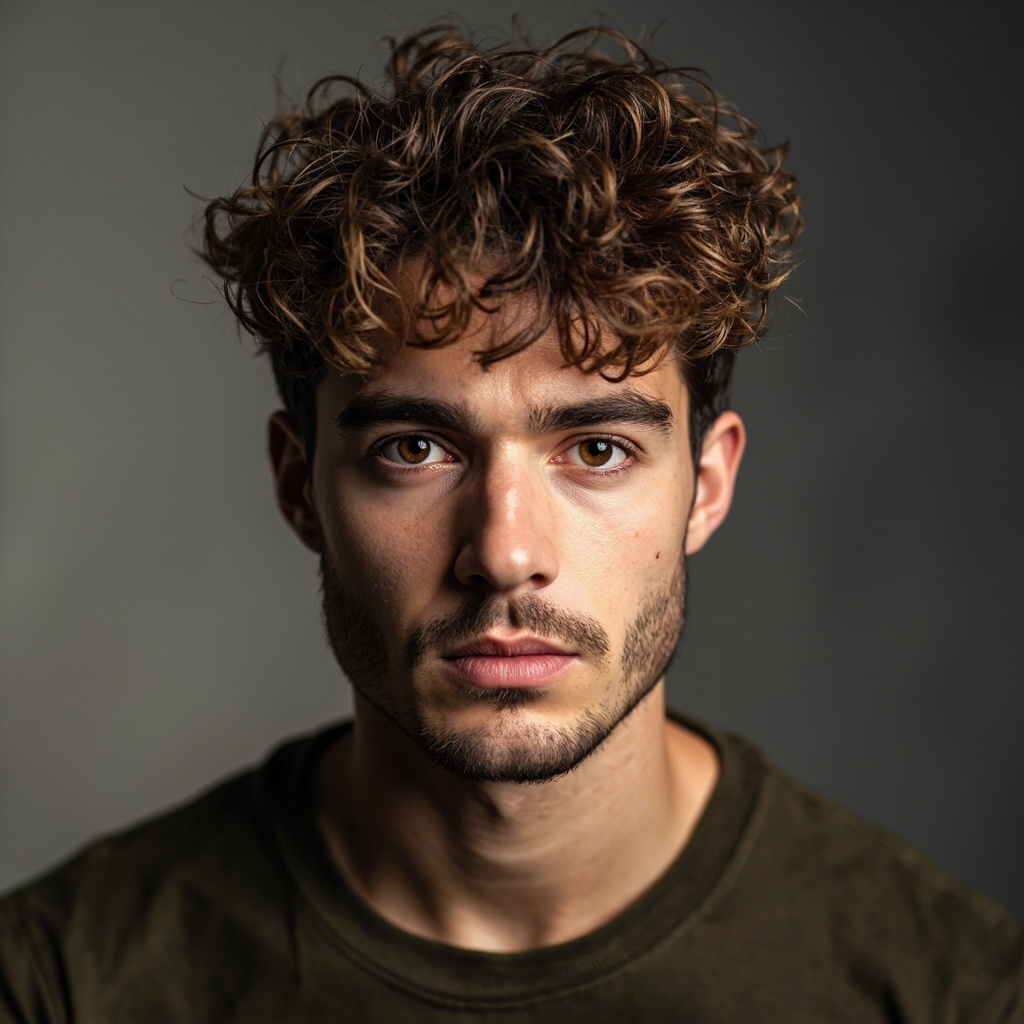
Let your curls grow tall before falling. This maximizes volume and drama while the low fade provides clean contrast. The high curl style creates presence and impact, making it ideal for guys who want their hair to be a defining feature of their overall look.
Achieving height requires growing your curls to significant length—typically four to six inches on top. This allows your curls to stand up and back, creating volume that can extend several inches above your head. The low fade at the sides creates the contrast that makes the height impressive.
Styling focuses on maximizing height. Use a blow dryer and round brush to lift your curls while drying, encouraging them to stand rather than fall. A volumizing mousse or spray provides the extra hold needed to maintain height throughout the day.
This style suits confident individuals with expressive personalities. The volume and drama are undeniable—there’s no subtlety here. If you want a style that announces your presence, the high curl with low fade is an excellent choice.
Ask your barber: “Low taper fade, and leave my curls as long as possible on top—four to six inches minimum. I want to grow them tall so they create maximum volume and height. The contrast between the short sides and tall curls should be dramatic.”
27. Low Taper Fade with Medium Length Curls
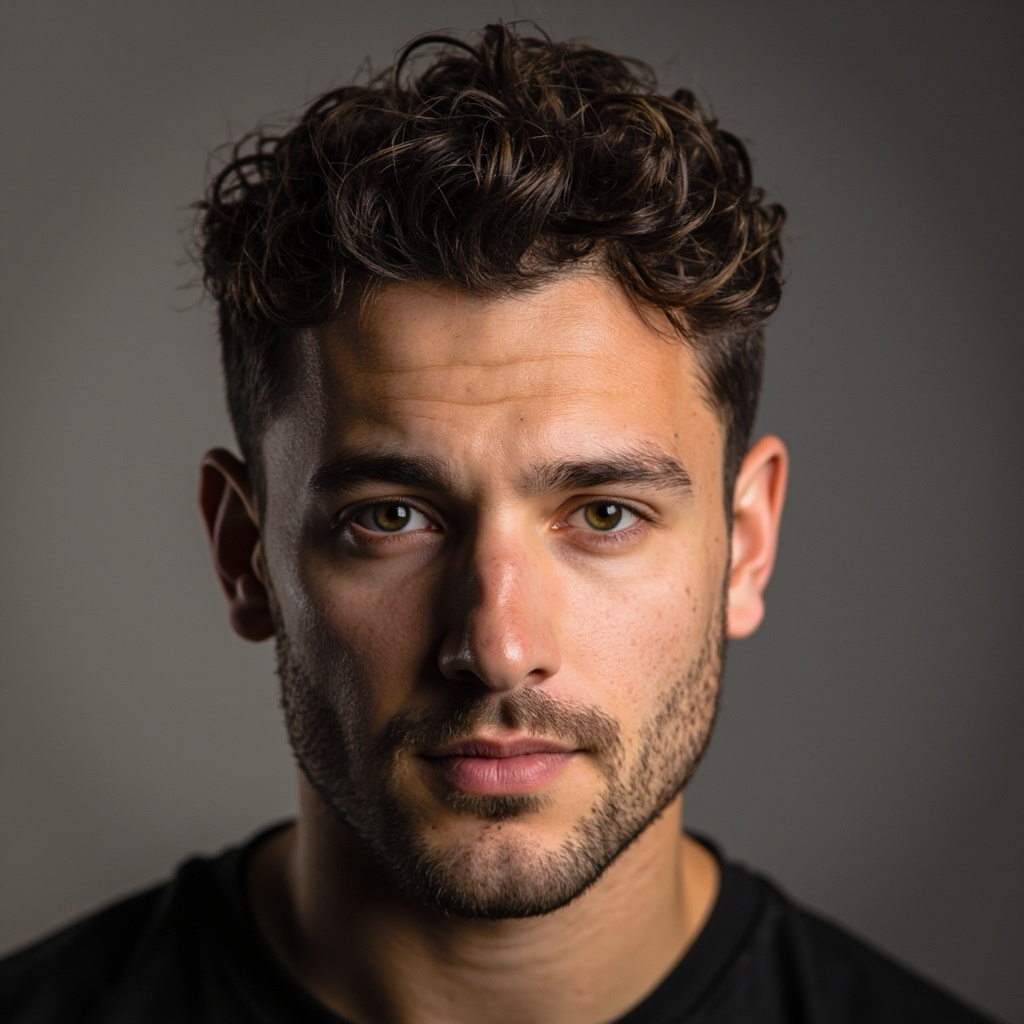
The sweet spot. Not too short, not too long—medium curls give you styling flexibility without requiring daily maintenance. This is the most versatile curly fade option, working well for most occasions and hair types without demanding significant effort.
Medium length typically means two to three inches of curl length on top. This provides enough hair to create various styles while remaining short enough to manage easily. You can brush it forward, spike it up, or let it fall naturally depending on your mood and occasion.
The medium length approach offers the best of both worlds. You have enough curl to show texture and personality, but not so much that styling becomes a chore. This balance makes the medium curly fade popular with guys who want style without constant maintenance.
This style works for most face shapes and hair types. It’s particularly effective for guys who are new to curly fades and want to experiment before committing to more dramatic lengths. The medium approach allows you to test the look without overwhelming commitment.
Ask your barber: “Low taper fade with medium-length curls on top—about two to three inches. I want a balanced look that gives me styling flexibility without requiring constant maintenance.”
28. Low Taper Fade with Comb Over
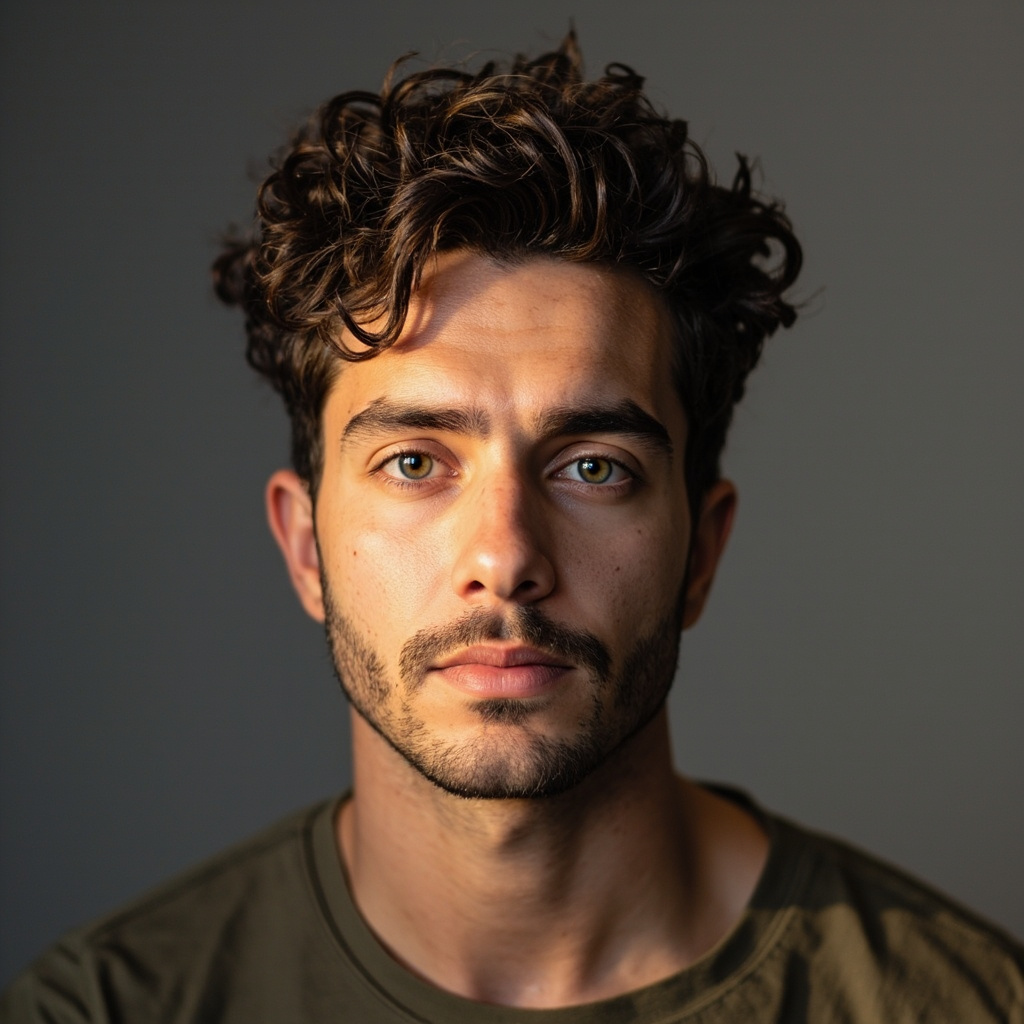
The comb over on a taper fade adds sophistication. It’s a classic look that works especially well with slightly straighter curly textures. The style creates a refined, put-together appearance that bridges traditional and contemporary aesthetics.
Creating the comb over involves sweeping your curls to one side and maintaining that direction throughout the day. Unlike the side part, the comb over doesn’t feature a sharp line—instead, the curls are styled to flow in one direction across your head.
This style works best when your curl pattern is relatively loose or wavy. Tight coils can resist the comb over styling, making it difficult to maintain the look throughout the day. If your curls are very tight, this might not be the best option for you.
The comb over flatters professional environments where a polished appearance matters. It’s subtle and refined, making it an excellent choice for corporate settings or formal occasions. The style communicates that you care about your appearance without being flashy or extreme.
Ask your barber: “Low taper fade with a comb over. I want to sweep my curls to the [left/right] side, creating a refined, flowing style. No sharp part line—just a smooth, sophisticated sweep across my head.”
29. Low Taper Fade with Stubble Fade
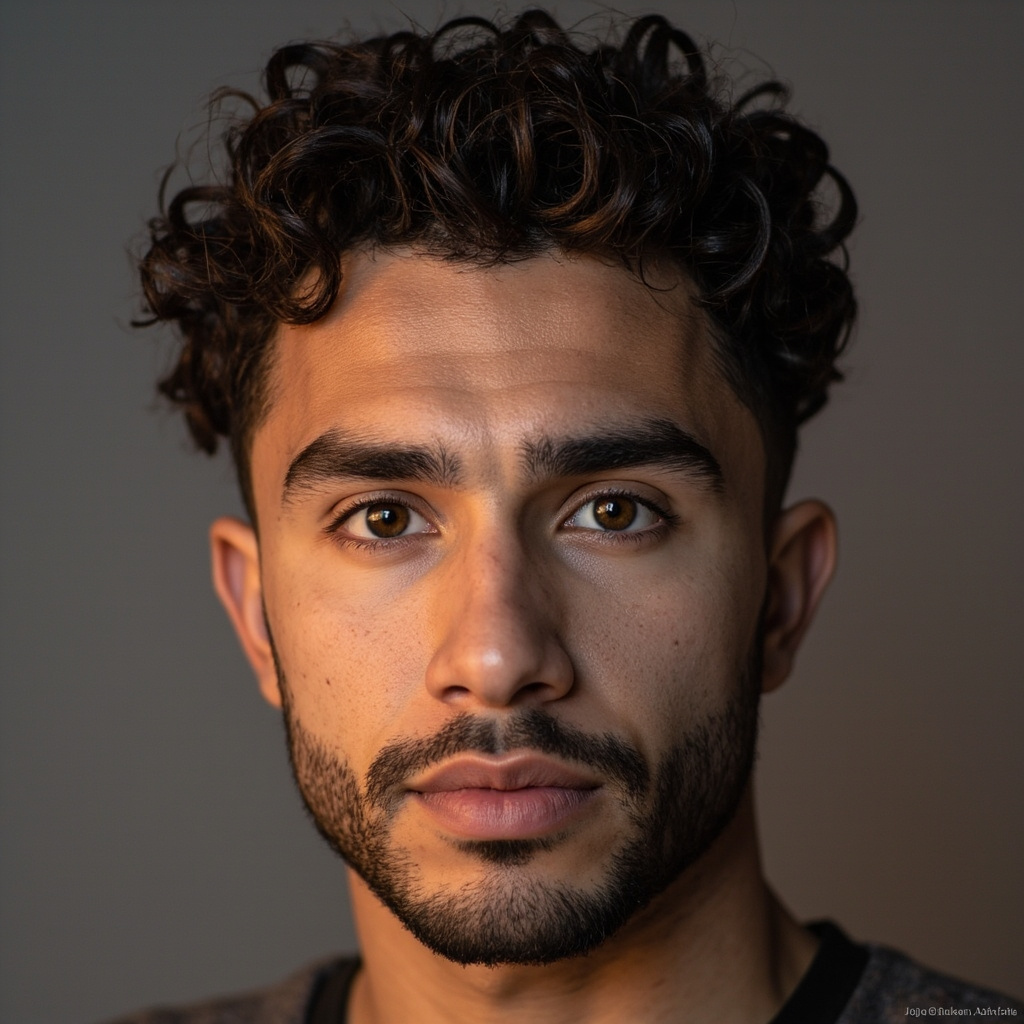
Combine your hair fade with a stubble beard fade. The two transitions mirror each other and create a cohesive, polished look. The stubble fade extends the visual line of your hair cut into your beard, creating a unified appearance from head to face.
The key to a successful stubble fade is communication with your barber about both your hair and beard expectations. The hair fade should end at a height where your beard naturally begins, allowing the stubble to continue the gradient effect smoothly.
Maintaining the stubble requires regular trimming to keep the length consistent. Use an electric trimmer with a guard to maintain your stubble at the desired length—typically between one and three millimeters. The consistency of the stubble length is what makes this look polished.
This combination works for most face shapes and beard densities. It’s particularly effective for guys who struggle with patchy beard growth, as the fade effect makes the beard appear more complete than it might actually be.
Ask your barber: “Low taper fade on my head with a stubble beard fade. I want the fade to connect smoothly from my hair into my beard, creating one continuous transition. Keep the stubble at [one/two/three] millimeter[s].”
30. Low Taper Fade with Curly Bangs
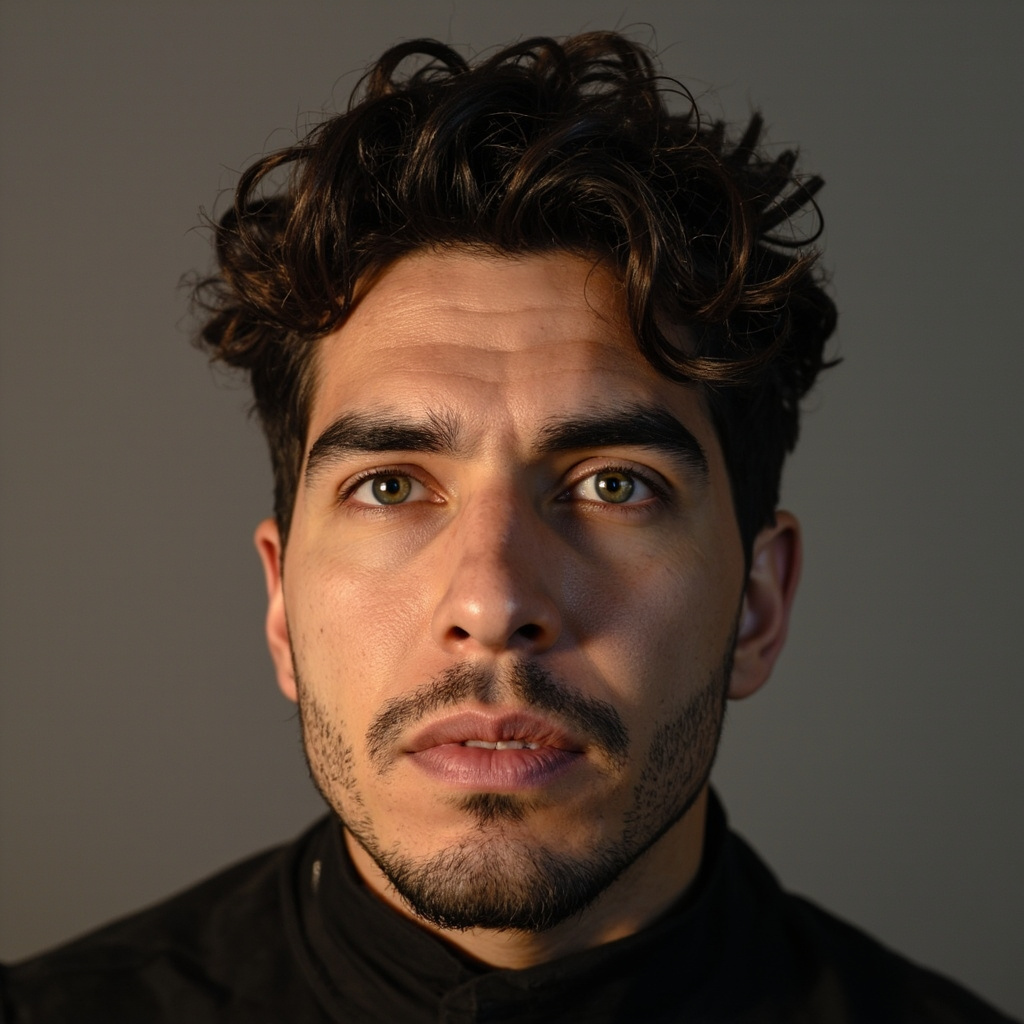
Let your curls fall across your forehead in bangs. This flatters round faces and adds a playful element to an otherwise clean cut. The curly bangs create movement and visual interest at the front of your style, drawing attention to your face.
Creating curly bangs requires leaving the front section of your curls longer than the rest—typically two to four inches. Your barber should angle the cut so the front section falls forward naturally, creating a fringe effect that covers your forehead partially.
Styling curly bangs involves managing how they fall. Use a lightweight product to keep the bangs defined without stiffness. The goal is soft, natural movement rather than rigid styling. Avoid products that will make your bangs look greasy or weighed down.
This style particularly suits round and oval face shapes. The bangs add vertical lines that elongate and balance proportions. They also draw attention to your eyes and forehead, which can be flattering if you have strong features in those areas.
Ask your barber: “Low taper fade with curly bangs that fall across my forehead. I want the front section of my curls left longer—about two to three inches—so they create a playful, soft fringe. The rest of my sides should be cleanly faded.”
How to Ask Your Barber for a Low Taper Fade with Curly Hair
Communication is everything. Here’s exactly what to say:
- “I want a low taper fade on the sides, leaving my curls longer on top.”
- “Start the fade just above my ears and taper down gradually.”
- “I want the transition to be natural, not disconnected.”
- “Leave my curls long enough to show their natural pattern.”
Bring reference photos if possible. I always tell my clients: a picture tells a thousand words and saves everyone time and frustration. Browse our style gallery above and screenshot the looks you like most to show your barber.
How Often Should You Get a Low Taper Fade Trim?
In my experience, most guys with curly hair need a trim every 3-4 weeks to keep the fade looking crisp. The curls on top can go longer—up to six weeks—but the fade line will blur if you wait too long.
If you’re growing out a style or want to extend time between cuts, ask your barber to leave a bit more length at the start of the fade. This gives you more time before the fade grows out too far and needs professional attention.
Between haircuts, maintain your fade at home with an electric trimmer. Clean up the hairline and sides every week or two to keep things crisp. Your curls need less maintenance—just regular washing and light styling products.
Best Products for Low Taper Fade Curly Hair
You don’t need much, but the right products make all the difference:
- Curl cream or foam: Defines your curls without stiffness—apply to damp hair and scrunch upward
- Leave-in conditioner: Keeps curls moisturized and reduces frizz—essential for healthy curl maintenance
- Light pomade or wax: Adds hold for styling when you want a more polished look
- Sea salt spray: Enhances natural texture and adds grip—perfect for second-day hair refreshing
- Moisturizing oil: Seals hydration into your curls and adds shine without greasiness
Final Thoughts
The low taper fade with curly hair is one of those styles that looks complicated but is actually incredibly practical. It grows out gracefully, works with virtually any curl pattern, and gives you endless styling options.
My biggest recommendation? Find a barber who actually knows how to work with curly hair and Mexican Edgar cuts. The difference between a mediocre fade and a great one—especially on curly hair—is night and day. Ask friends for recommendations, read reviews, and don’t be afraid to switch barbers if yours doesn’t understand your curl pattern.
If this guide helped you, share it with a friend heading to the barbershop. And drop a comment below with which style you’re going to try!
FAQ
What’s the difference between a low taper fade and a low skin fade?
A taper fade gradually transitions to shorter lengths but doesn’t go completely bald. A skin fade shaves all the way down to the skin, creating a more dramatic contrast with the hair on top. For curly hair, both work well—the skin fade creates more dramatic contrast while the taper fade offers a more subtle transition.
Will a low taper fade work if I have very tight curls?
Absolutely. Taper fades work with all curl patterns, from loose waves to tight coils. Your barber can adjust the length on top and the intensity of the fade to match your specific texture. In fact, tight curls often look better with fades because the contrast makes each curl stand out more distinctly.
How do I maintain my low taper fade between haircuts?
Keep the faded areas clean with a soft brush. Apply styling products only to the curls on top—avoid getting heavy products on the sides or the fade will grow out faster. A silk pillowcase helps preserve your curl pattern overnight and reduces frizz caused by cotton pillowcases.
Can I do a low taper fade on curly hair myself?
I don’t recommend it. Even with at-home clippers, it’s easy to mess up the fade line or take too much off. The tapers require skill and experience to execute properly, especially where they connect with your natural curls on top. Leave this one to the professionals—your curls deserve it.
How long should my hair be for a low taper fade with curls?
You need at least 2-3 inches of length on top for the curls to have something to work with. The longer your curls, the more dramatic the contrast with the fade. For styles like the faux hawk or pompadour, you might need 4-5 inches for maximum impact.
What’s trending with low taper fades for curly hair in 2026?
The biggest trends I’m seeing are textured messy curls on top, custom hairline designs and line-ups, the burst fade technique, and combining fades with full beards for a cohesive look. Natural texture is also trending—with more guys embracing their curls exactly as they grow rather than fighting their natural pattern.
Does a low taper fade suit all face shapes?
It’s one of the most versatile cuts out there. The low fade works well with round, oval, square, and heart-shaped faces. Your barber can adjust the fade height and curl length to best flatter your specific face shape. The key is communicating your face shape to your barber so they can tailor the cut appropriately.